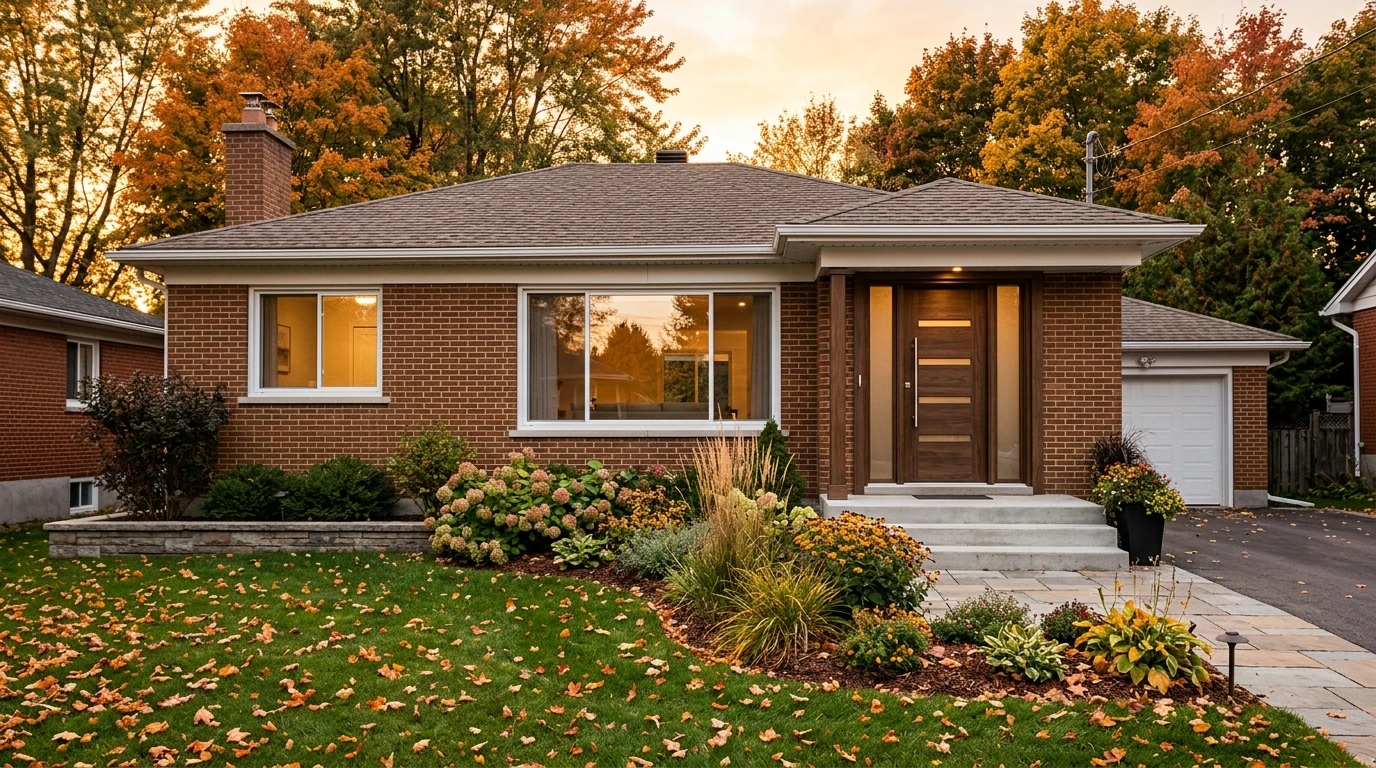
Choosing bungalow windows in Quebec is a different exercise from replacing windows in a city plex or a two-storey house. Bungalows and split-levels, built in great numbers across Quebec suburbs in the post-war decades, have long low facades, big living room windows, basement openings close to the ground and, in split-levels, half-floors that change the window layout from room to room. This guide walks through each part of the house and the window styles that tend to suit it.
How Quebec Bungalows and Split-Levels Are Laid Out
The classic Quebec bungalow is a single storey over a full basement, with a long facade facing the street. The living room usually sits at the front behind a large window, the kitchen at the back or side, and two or three bedrooms along a hallway. Windows tend to be horizontal in proportion, matching the low roofline, and many homes still have their original sliders or a first round of replacements.
Split-levels add a twist. The house is divided into staggered half-floors, with a few steps up to the bedrooms and a few steps down to a family room partly below grade. That means windows at very different heights: large openings in the main living area, standard bedroom windows upstairs and wide, shallow windows on the lower level just above the ground.
Before choosing products, walk around the house and note each opening: its room, its orientation, how it opens today and what bothers you about it. This simple inventory makes the conversation with a window professional far more productive. It also shows where a different window style would improve the room.
The Big Front Window: Picture, Bay and Combination Units
The living room window is the signature of most bungalows. It is often wide and low, and it frames the view of the street and the front lawn. Replacing it with a single fixed unit maximizes light and gives the cleanest look, while flanking a central picture window with two operable units adds ventilation without breaking the view.
Some homeowners take the opportunity to add depth with a bay or bow window. Projecting a few angled or curved units beyond the wall creates a seat or a plant ledge and brings in light from several directions, which suits a deep living room. Because a bay changes the facade and needs structural support and a small roof above, it requires more planning than a straight replacement and may need approval from your municipality.
Whatever the choice, keep an eye on sill height and proportions. A bungalow facade looks balanced when the main window lines up with the other openings and keeps the horizontal feel of the house. Narrow frames help preserve as much glass as possible in a wide opening.
Bedroom Windows: Ventilation, Light and Safe Exits
Bungalow bedrooms are often small rooms with a single window, so that window has to do a lot: bring in light, ventilate at night and provide a way out in an emergency. Many original bedroom windows are horizontal sliders, a style that remains practical. A modern double slider opens on both sides, which makes cleaning easier and lets you choose which side to open.
Casement windows are another popular option in bedrooms, because the whole sash opens and the lock pulls it firmly against the weatherstripping. If you are changing the size or style of a bedroom window, ask about the minimum opening requirements for emergency exits. These rules come from the building code and municipal bylaws, so check with your city or a professional before finalizing the order. As a rule, a window meant as an emergency exit should also open easily from the inside, without a key or tools.
- Check the clear opening: the free space when the window is fully open matters, not just the frame size.
- Mind the sill height: a sill that is too high is awkward for ventilation and for getting out.
- Think about privacy: a bedroom facing a neighbour may suit frosted glass or a higher opening.
- Consider noise: bedrooms facing a busy street benefit from better glazing and a tight installation.
Basement and Lower-Level Windows in Split-Levels
Lower-level windows sit close to the ground, which exposes them to snow, meltwater and splashing rain. In many bungalows, the original basement windows are small sliders set in wood bucks that have softened over the years. Replacement is a good moment to check the condition of the opening, the foundation around it and any window well.
Awning windows are a common choice for these openings. Hinged at the top, they can stay slightly open in light rain and they seal firmly when closed. Sliders also work well when the opening is wide and shallow. In a split-level family room, larger lower-level windows can turn a dim space into a pleasant room, provided the grade and the window well allow it.
Pay particular attention to drainage. The ground should slope away from the house, window wells need a clear drain and snow should not pile against the glass all winter. A new window will not stay dry if water collects around it. If the lower level has, or will have, a bedroom, the emergency-exit questions above apply here too, including enough clear space in the window well to climb out.
Glazing and Energy Choices for Single-Storey Homes
In a bungalow, most rooms have at least one exterior wall, so window performance affects comfort throughout the house. Double glazing with a low-emissivity coating and an insulating gas fill is a common standard in Quebec, and warm-edge spacers help limit condensation along the edges of the glass. For north-facing rooms or exposed corners, triple-glazed windows are worth discussing.
Orientation matters as much as the glass. A south-facing living room window collects welcome sun in winter, while west-facing windows can overheat a room on summer afternoons. Bungalows with deep eaves already get some shade, and low-E coatings can also be chosen with orientation in mind. Ask which glass options suit each side of the house rather than using one recipe everywhere.
Frames count too. Multi-chamber uPVC frames are popular in Quebec for their insulating value and low maintenance, and exterior colours and aluminum capping let you match the existing trim. The installation itself, with careful insulation and sealing around the frame, completes the picture.
Keeping the Character of a Bungalow or Split-Level
Bungalows and split-levels have a recognizable post-war look: horizontal lines, brick or siding facades and simple trim. New windows can refresh that look without fighting it. A few design choices make the difference between windows that blend in and windows that look added on.
If you are also planning a new entry door, siding or roof, think about the order of the work. Coordinating the windows with the other exterior changes avoids redoing trim and capping later, and the facade ends up looking like one finished project. It also lets the flashing and sealing around every opening be handled in a single step.
- Respect the proportions: keep the horizontal emphasis and align the tops of windows across the facade.
- Choose grilles carefully: simple grilles or none at all usually suit these homes better than ornate patterns.
- Coordinate colours: pick an exterior frame colour that works with the brick, the siding and the front door.
- Match operating styles: use the same style on a given facade for a consistent look.
- Think about the front door: replacing windows and the entry door together keeps the facade coherent.
Planning Bungalow Windows in Quebec: Free Estimate
Most bungalow owners do not replace every window at once. Some start with the large living room window or the bedrooms, others with the basement, where comfort problems are most obvious. Either way, a plan for the whole house keeps styles, colours and glass consistent from one phase to the next.
It is worth bringing in a professional before you enlarge an opening, add a bay, change a bedroom window that serves as an emergency exit, or replace basement windows where the wood bucks or the foundation show damage. Unisson Groupe manufactures and installs windows and doors in Saint-Laurent and serves homeowners across Greater Montreal. A free in-home estimate is a chance to go over each opening of your bungalow or split-level and the window styles and glass options that suit it. Keep your notes from the walk-around handy: they make the visit more useful.
Frequently Asked Questions
What type of window is best for a bungalow?
There is no single best type. Many bungalows combine a large fixed or picture window in the living room, casements or sliders in the bedrooms and awning or slider windows in the basement. The right mix depends on each room, its orientation and how you want to ventilate it.
Can I enlarge the living room window in my bungalow?
Often yes, but enlarging an opening affects the wall structure, the header above the window and the exterior finish. It may also require a permit. Have the wall assessed and check with your municipality before planning a larger window.
Are triple-glazed windows worth it in a bungalow?
Triple glazing can improve comfort near the glass, especially on north-facing or windy walls and in noisy locations. Whether it suits your home depends on orientation, your priorities and the rest of the house, so discuss it room by room during your estimate.
Should I replace the basement windows at the same time?
Not necessarily, but lower-level windows are often in the worst condition because they sit close to the ground. Including them in the plan lets you check the openings, window wells and drainage along with the rest of the house.
Do I need a permit to replace windows in a bungalow?
Replacing windows with the same size and style is often simpler than changing openings, but rules vary between municipalities in Quebec. Check with your city or borough before ordering, especially if you plan to enlarge an opening or change the look of the facade.