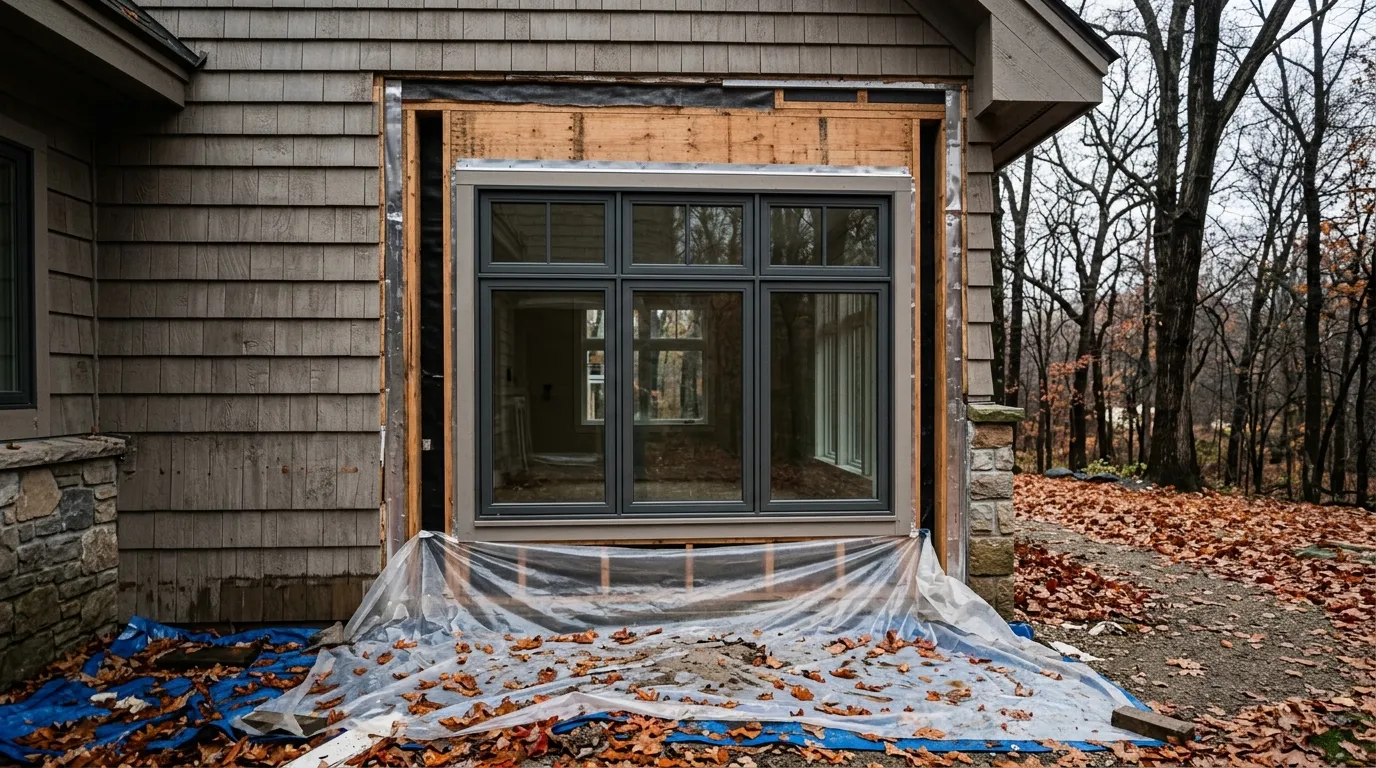
Many Quebec homeowners decide to replace their windows in the fall, right when the first drafts make the old ones impossible to ignore. The natural worry is that it is too late: that the house will be freezing on installation day, or that sealants will not cure in the cold. In reality, fall is one of the busiest installation seasons in the province, and a well-organized crew can replace windows in cool weather without turning your living room into a fridge. Here is what to expect and how to prepare.
Why Fall Installations Are So Common in Quebec
The fall is when windows announce their problems. The first cold nights bring drafts, condensation and cold spots that were invisible all summer, and homeowners who were planning to replace their windows "eventually" suddenly want it done before winter. That is why the months from September to early December are consistently among the busiest of the year for window installers in Quebec.
There is also a practical logic to it. Fall weather is usually mild enough for comfortable work, the humidity is lower than in summer, and replacing the windows before the heating season means you get the benefit of the new units through the whole winter. Exterior painting and landscaping are finished, and there is no snow yet on the ground around the foundation.
Quebec installers are also used to the cold. Crews install windows throughout the winter in this province, with methods and materials adapted to low temperatures. Late fall is not a compromise; it is simply part of the normal installation season.
One Opening at a Time: How the House Stays Warm
The single most important habit of a good cold-weather crew is to open only one window at a time. The old unit comes out, the opening is cleaned and prepared, the new window goes in, is levelled, fastened and insulated, and only then does the crew move to the next opening. At no point are several walls open to the outside at once.
For a standard replacement, each opening is exposed to outdoor air for a short time, and the heat loss during that time is modest. Your heating system stays on throughout the day, and crews usually ask you to close the door of the room they are working in so the rest of the house stays at its normal temperature. On colder days, a sheet of plastic may be taped over the interior of the opening while the exterior work continues.
Openings are never left open overnight. If an unexpected problem appears, such as rotten framing behind an old window that needs repair, the crew secures and insulates the opening temporarily before the end of the day. You go to bed in a closed, heated house, every night of the job.
Sealants and Foam: The Temperature Limits That Matter
The materials that seal and insulate a window are the ones most affected by cold. Low-expansion polyurethane foam, which fills the gap between the window frame and the wall, depends on both the temperature of the can and the temperature of the surfaces it is sprayed on. Standard formulations generally ask for surfaces above roughly 5°C, while winter-grade formulations are rated for application well below freezing. Crews keep foam cans warm in the truck or indoors so the product flows and expands properly.
Exterior sealants follow the same logic. Each product has a minimum application temperature printed on its technical data sheet, and cold-weather formulations exist precisely for Quebec's shoulder seasons. Just as important as the thermometer is the surface: sealant will not bond to frost, ice or a wet substrate, so crews dry and warm the joint before applying it. Water-based acrylic sealants are avoided in the cold because they can freeze before they cure.
On a day that is simply too cold or wet for proper exterior sealing, a careful installer will not force it. The window is fully fastened, insulated and sealed on the interior side, and the final exterior bead is applied on the next suitable day. That is a sign of quality work, not a delay to worry about.
- Foam: low-expansion, window-rated, cans kept warm, winter-grade formula when surfaces are cold.
- Exterior sealant: cold-rated product applied to dry, frost-free surfaces.
- Interior air seal: completed the same day to stop drafts immediately.
- Membranes and tapes: products with cold-weather adhesion, pressed firmly onto clean substrates.
How Crews Work in Rain and Cold
Installation days are planned around the forecast. Light drizzle or cool, grey weather is not a problem for experienced crews: they protect the opening with tarps, keep materials dry and adjust the order of the work. Heavy rain, strong winds or a hard freeze with ice on the walls are different, and in those conditions the job is usually rescheduled rather than done poorly.
Early snow is handled the same way. Crews clear the work area around each opening, keep walkways safe and protect the new frames from slush. In practice, most late-fall installation days in southern Quebec are perfectly workable, and reschedules are the exception rather than the rule.
You will usually hear from your installation coordinator the day before if the weather looks doubtful. Keeping a little flexibility in your own schedule during the installation week makes that much easier for everyone. A rescheduled day is simply moved to the next suitable date on the calendar.
Protecting Your Interior During the Work
Removing an old window inevitably produces some dust, debris and fragments of old caulking and trim. In fall and winter, the crew also comes in from wet or snowy ground many times a day. A good installer plans for both before the first window comes out.
Expect drop cloths under every opening, floor runners from the entrance to each room, and shoe covers or a clean-shoe routine at the door. Old windows and packaging are removed from the site, and the work area is vacuumed at the end of each day. Our window installation guide explains each step of the process in more detail.
What You Should Prepare Before Installation Day
A little preparation makes the day faster, cleaner and warmer. Most of it is about giving the crew clear access to each window inside and out, and making sure nothing fragile is in the way. Most of it can be done the evening before.
Think also about the people and pets in the house. With doors opening and closing all day and windows temporarily out, pets are safest in a closed room or away for the day. If someone at home is sensitive to the cold, plan for them to spend the day in a room that will be done early or not at all.
- Clear about 1 to 1.5 metres of space in front of every window being replaced.
- Remove curtains, blinds and rods, and take down anything hanging on the walls nearby.
- Move fragile items, plants and electronics away from the work area.
- Disconnect or tell the crew about alarm sensors on the windows.
- Clear the driveway and a path around the house, including leaves and early snow.
- Keep pets in a closed room or away from home for the day.
- Leave the heat on at its normal setting; do not turn it up or off.
After Installation: The First Weeks
The first cold nights after installation are a good test of the new windows. You should notice fewer drafts and warmer glass right away. Some condensation on the new glass during the first weeks is not unusual, especially if the house was holding a lot of summer moisture; it usually fades as indoor humidity settles.
Check that each window opens, closes and locks smoothly, and let your installer know if anything feels stiff. If interior trim finishing was scheduled separately, it will be completed once the foam and sealants have cured. Keep your warranty documents and installation date together for future reference.
The cost of a late-fall installation depends on your project, the number and type of windows and the condition of the openings. The best way to know is to request a free estimate. A Unisson advisor will measure your openings, explain how the crew will work in your house and confirm the installation dates available before winter.
Frequently Asked Questions
Is it too cold to install windows in November in Quebec?
No. Windows are installed throughout the fall and winter in Quebec. Crews replace one opening at a time, use cold-rated foam and sealants, and never leave an opening exposed overnight.
Will my house get cold during window installation?
Only briefly, in the room being worked on. Each opening is exposed for a short time, the heat stays on and the door to the room is usually kept closed so the rest of the house stays at normal temperature.
Does spray foam work in cold weather?
Yes, when the right product is used. Winter-grade low-expansion foams are rated for cold surfaces, and crews keep the cans warm so the foam flows and expands properly.
What happens if it rains on installation day?
Light rain is handled with tarps and careful sequencing. Heavy rain, strong winds or icy walls usually mean the job is rescheduled to protect the quality of the installation.
How should I prepare my home for window installation?
Clear about 1 to 1.5 metres in front of each window, remove curtains and blinds, move fragile items, clear the driveway and path, and keep pets in a closed room.
How much does window installation cost in the fall?
The exact figure depends on your project, the number of windows and the condition of the openings. Request a free estimate for a precise quote and available dates.