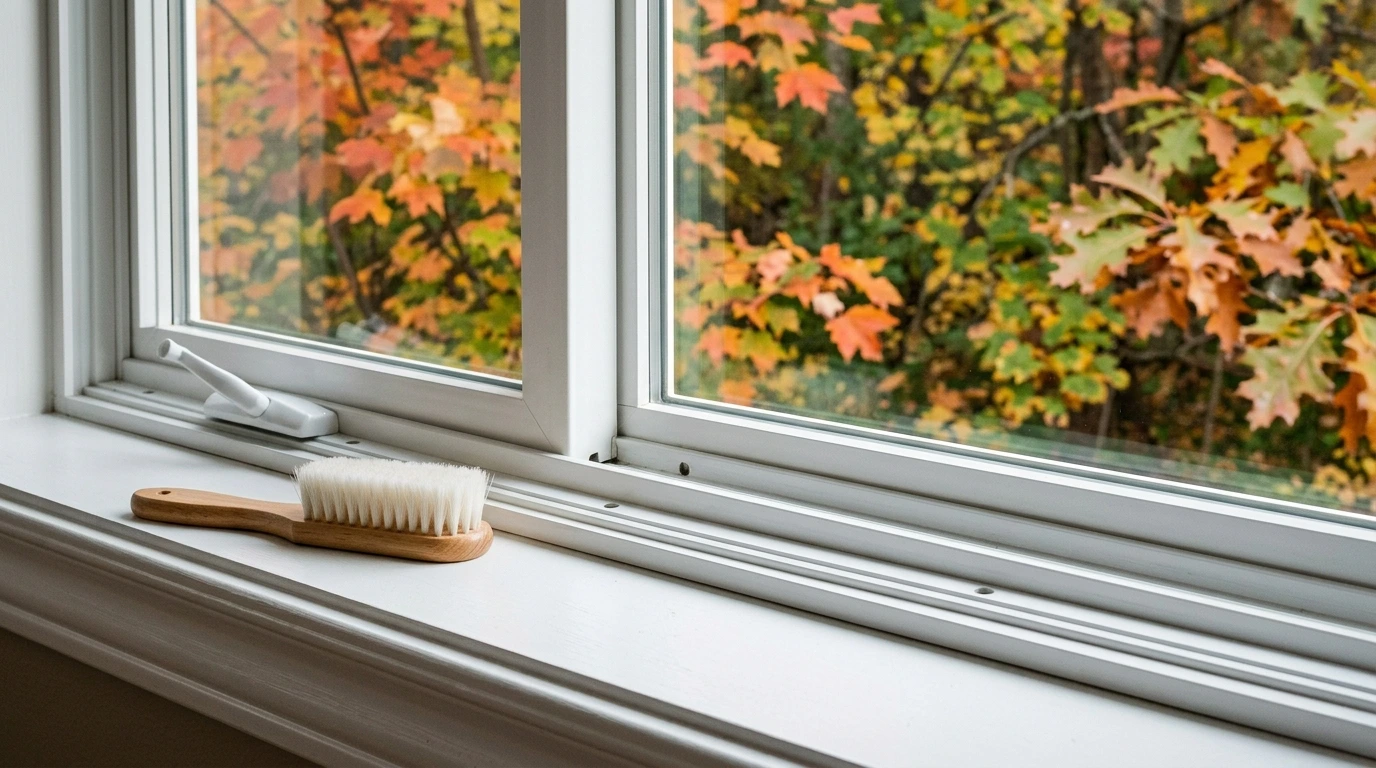
If you only do one fall chore on your windows, make it this one: clean window tracks and weep holes before the snow arrives. Over the summer, dust, pollen, leaves, dead insects and grit build up in the tracks of sliding windows and patio doors and can block the small drainage openings that let water escape. In a Quebec winter, that trapped water freezes, jams the sash and can leak inside. A careful cleanup takes little time and helps your windows and doors keep sliding, draining and sealing properly through the winter.
Why Window Tracks and Weep Holes Matter
Sliding windows, hung windows and patio doors all have a track or sill where the moving sash rests. Rain and melting snow inevitably get into that track, which is why it is designed with small slots or holes on the outside face, called weep holes. They let the water drain out instead of collecting in the frame.
When the weep holes are blocked by dirt or debris, water stays in the track. In fall it can overflow onto the interior sill during a heavy rain. In winter it freezes, gluing the sash in place, stiffening the weatherstripping and sometimes cracking a part when someone forces the window open. The same goes for the bottom track of a sliding patio door, which collects grit from shoes and the deck.
Casement and awning windows do not have open tracks, but their frames still have drainage paths, hinges and a bottom rail that collect dirt. Door sills and thresholds also have their own drainage and weatherstripping that deserve a look before winter.
What You Need for the Job
You do not need special products. Most of the work is done with a vacuum, a few brushes and warm soapy water. The key is to remove dry debris first, then clean, then dry, so you are not turning dust into mud that ends up in the drainage holes.
Avoid harsh solvents, abrasive pads and pressure washers. They can damage the finish of PVC and aluminum, scratch the glass and push water past the seals into the wall.
- A vacuum with a narrow crevice tool
- A stiff paintbrush or an old toothbrush
- A thin plastic tool, pipe cleaner or wooden skewer for the weep holes
- Warm water with a little mild dish soap
- Microfibre cloths and a small spray bottle
- Silicone spray for the rollers and weatherstripping
How to Clean Window Tracks and Weep Holes, Step by Step
Start on a dry, mild day so you can leave the windows open long enough for everything to dry. Open the sliding sash fully, or remove it if your model lifts out easily and you are comfortable doing so. Brush the loose debris toward the centre of the track and vacuum it out, working into the corners with the crevice tool.
Next, spray the track with warm soapy water and scrub with the brush, paying attention to the corners and the area around the weep holes. Wipe up the dirty water with a cloth rather than letting it run toward the drainage openings. Rinse lightly with clean water and dry the track completely.
Then deal with the weep holes themselves. From outside, look for the small slots at the bottom of the frame. Gently clear each one with a thin plastic tool or a pipe cleaner, without pushing hard or using a metal object that could tear the small flap that covers some of them. To test them, pour a little water into the track and watch it drain to the outside. If it pools, the path is still blocked.
- Open or remove the sash
- Brush and vacuum loose debris
- Wash the track with mild soapy water
- Wipe, rinse lightly and dry
- Clear each weep hole gently from outside
- Test the drainage with a little water
Patio Door Tracks and Entry Door Sills
A sliding patio door takes far more traffic than any window. Grit trapped in the bottom track wears the rollers, makes the panel hard to slide and creates gaps where cold air and snow can enter. Vacuum and wash the track the same way as a window, then check that the rollers turn freely. A light spray of silicone on the track and rollers can help the panel glide in the cold. Our page on sliding patio doors shows the main components.
On entry doors, look at the sill and the adjustable threshold. Clean any dirt or de-icing salt residue from last winter, check that the drainage channels in the sill are open and inspect the door sweep at the bottom of the door. If you can see daylight under the door or feel air coming in, the threshold may need adjusting or the sweep may need to be replaced.
Finally, check the exterior side. The ground or the deck in front of a patio door or entry door should slope away from the opening, and nothing should block the water draining out of the sill.
Weatherstripping, Rollers and Lubrication
Once the tracks are clean, take a close look at the weatherstripping along the sash and the frame. It should be soft, continuous and in contact with the surface it seals against. Flattened, torn or missing sections let cold air in and allow water to reach places it should not. Many types can be replaced, as long as you find the right profile for your window or door.
Use a silicone spray or a dry lubricant on the rollers, the locks and the weatherstripping, applied lightly and wiped off. Avoid oil and heavy grease, which attract dust and turn into a paste in the cold, ending up right back in the track you just cleaned.
- Weatherstripping: soft, continuous, no tears or gaps.
- Rollers: turn freely, no grinding noise, sash slides without effort.
- Locks: engage smoothly and pull the sash tight.
- Door sweep: touches the threshold along its full width.
Signs of a Bigger Problem
Cleaning often solves drainage issues, but sometimes it reveals something more serious. If water keeps pooling in a track even after the weep holes are clear, if the sill is soft or stained underneath, or if the frame is warped and the sash no longer closes evenly, the problem may be in the window itself or in the way it was installed.
Watch also for fog between the panes of glass, frost forming along the bottom of the sash every winter or a patio door that stays hard to slide after cleaning. These are signs that a part, the sealed unit or the whole product is reaching the end of its life. Our pages on double slider windows and casement windows describe how current models are built and drained.
When Cleaning Is Not Enough
A good cleaning every fall helps windows and doors keep working well. When it is not enough, the signs are usually clear: a track that floods again after the weep holes are cleared, a sill that is soft or stained underneath, fog between the panes, or a door that can no longer be adjusted to close against its weatherstripping. At that point it makes sense to have a professional look at the opening, because the cause may be in the frame or the installation rather than in the dirt. Sometimes a part or a seal can be replaced; sometimes replacing the window or door is the more sensible choice, and its cost depends on the product and the opening.
Unisson Groupe manufactures and installs windows and doors and serves homes across Greater Montreal from Saint-Laurent. If your fall cleanup turned up more than dirt, request a free in-home estimate and have your windows and doors looked at before the snow.
Frequently Asked Questions
What are weep holes in windows?
Weep holes are small slots or holes on the outside face of a window frame, usually at the bottom. They let water that gets into the track drain to the outside instead of collecting in the frame or leaking indoors.
How do I unclog window weep holes?
From outside, gently clear each hole with a thin plastic tool, a pipe cleaner or a wooden skewer. Then pour a little water into the track to check that it drains. Avoid metal tools that can damage the small flaps covering some weep holes.
How often should I clean window tracks?
At least once a year, ideally in the fall before the first freeze. Patio door tracks and windows facing a street, a garden or a construction site may need a quick clean in spring as well.
Can I use WD-40 on window and patio door tracks?
It is better to use a silicone spray or a dry lubricant. Oily products attract dust and thicken in the cold, so they end up as grime in the track. Apply a light coat and wipe off the excess.
Why does water pool in my window track?
Usually because the weep holes are blocked by dirt or debris. If the track still holds water after cleaning, the frame may be out of level, damaged or poorly installed, and it is worth having it inspected.