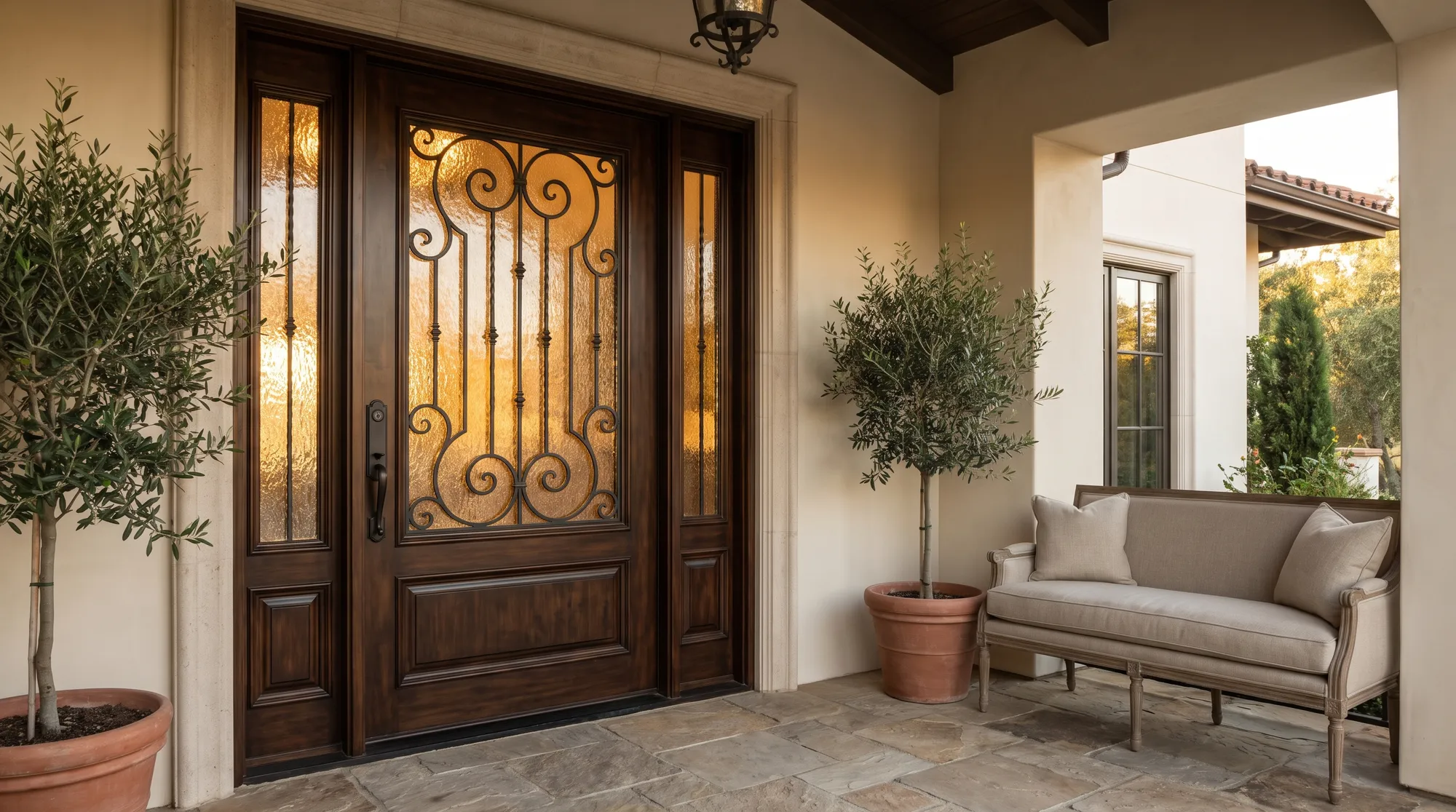
A front door with glass brings daylight into the entrance and gives the house a welcoming look from the street. In a Quebec winter, though, that same glass is the first place you notice cold, frost and the feeling of being watched from the sidewalk after dark. Here is how door glass inserts and sidelites behave in the cold, what frost on the inside is really telling you, and how to balance light, comfort and privacy.
How Door Glass Behaves in the Cold
An insulated steel or fiberglass door slab has a foam core that resists heat loss very well. The glass insert set into it is a different material with different performance, so in winter the glass is usually the coldest surface on the door. The larger the insert, the more of the door behaves like a window rather than an insulated panel.
That is not a flaw, but it does change how the entrance feels. Standing near a large glass door on a very cold night, you may sense a slight chill radiating from the glass even when there is no air leak. Sidelites add to the effect, since they are essentially narrow fixed windows on either side of the door.
Understanding this helps you separate normal behavior from real problems. A cool glass surface is expected. Moving air, frost that keeps growing or water pooling on the sill are signs that something needs attention.
Triple-Glazed Inserts and Warm-Edge Spacers
Door glass inserts are sealed units, just like window glass, and they come in double and triple glazing. A triple-glazed insert adds a third pane and a second sealed air space, which keeps the inside pane noticeably warmer in deep cold. That warmer surface means less radiant chill in the entrance and less chance of frost forming on the inside.
The edges of the glass matter as much as the number of panes. The spacer is the strip that holds the panes apart around the perimeter of the sealed unit. Traditional aluminum spacers conduct cold very efficiently, so frost tends to appear first along the edges of the glass. Warm-edge spacers made of less conductive materials keep the perimeter warmer and reduce that ring of frost.
When comparing doors for a cold entrance, ask about both the glazing and the spacer. A well-built triple-glazed insert with warm-edge spacers is one of the most effective ways to keep a glass door comfortable through a Quebec winter.
Frost on the Inside of Door Glass: A Humidity Signal
Frost on the inside of door glass forms when warm, humid indoor air touches a glass surface that is below freezing. Entrances are especially prone to it, because they are often a little cooler than the rest of the house and because wet boots, coats and outdoor air add moisture right next to the door.
Light frost along the bottom edge on the coldest nights is common and usually harmless. Heavy frost that covers much of the glass, or ice that builds up day after day, points to indoor humidity that is too high for the outdoor temperature, or to cold air reaching the glass through a leak. Frost between the panes is different: it means the sealed unit has failed and moisture has entered the space between the glass.
A few simple habits make a big difference in the entrance.
- Keep indoor humidity lower when outdoor temperatures drop sharply.
- Leave wet boots and coats on a tray or rack away from the door glass.
- Avoid heavy curtains pressed against the glass, which trap cold, moist air.
- Keep a heating vent or baseboard near the entrance clear and working.
- Have the door checked if frost appears between the panes or keeps growing.
Privacy Levels by Glass Texture
Winter evenings are long, and a brightly lit entrance with clear glass can feel very exposed from the street. Decorative and textured glass lets daylight through while blurring what is on the other side. Manufacturers often describe privacy on a scale, from nearly clear to fully obscured, so you can choose how much you want to see and be seen.
Texture does not reduce insulation, since the pattern is part of the glass rather than an added layer. It does, however, soften the look of frost and condensation, which can be a small bonus in a busy entrance. Sidelites can use a different privacy level than the door insert if you want more light on the sides and more privacy in the center.
- Clear glass: maximum light and view, minimum privacy.
- Light textures such as rain or reed patterns: shapes remain visible, details are blurred.
- Frosted or satin glass: soft, even light with only vague silhouettes.
- Heavily textured or decorative glass: high privacy, with light still passing through.
- Glass with integrated blinds: privacy you can adjust between the panes.
More Glass or Less: Choosing for a Cold Entrance
The right amount of glass depends on how your entrance is exposed. A door facing north or directly into the prevailing winter wind will feel colder with a large full-height insert. In that case, a smaller insert, a half-light design or triple-glazed sidelites can keep the look you want while protecting comfort.
A south-facing entrance tells a different story. Winter sun through a larger insert can warm the entrance on clear days and brighten a hallway that would otherwise be dark. A covered porch or vestibule also changes the equation, since it shelters the door from wind and reduces the temperature difference across the glass.
Think about how you use the space, too. If there is a bench or a coat closet right next to the door, a smaller insert may be more comfortable. If the entrance is a pass-through space, more glass may be the better choice. Our exterior doors are available with a wide range of insert sizes, glazing options and sidelite combinations.
Curtains, Blinds and Built-In Blinds
Window coverings on a door can add privacy at night, but they need to be chosen carefully in winter. A thick curtain pressed tightly against the glass keeps warm room air away from the glass surface, which makes the glass colder and increases frost and condensation behind the fabric. Leaving a small gap for air to circulate is usually better than sealing the glass off completely.
Door-mounted blinds or sidelight shades that sit a short distance from the glass work well, as long as they do not interfere with the handle or the weatherstripping. Built-in blinds sealed between the panes of the insert are the cleanest solution: they never collect dust, they do not trap moisture against the glass and they let you adjust privacy with a small slider.
Whatever you choose, open coverings during the day when possible. Letting winter sun reach the glass warms its surface and helps any light overnight frost clear on its own.
Replace the Insert or the Whole Door?
In many cases, a glass insert can be replaced without replacing the door itself. If the slab is solid, the frame is square and the weatherstripping still seals, swapping a fogged or outdated insert for a new triple-glazed unit with warm-edge spacers can improve comfort and refresh the look of the entrance.
When the problems go beyond the glass, replacing the whole door is usually the better long-term choice. The exact figure depends on your project, so the best way to compare both options for your home is to request a free estimate.
- An insert replacement may be enough when: the glass is fogged between the panes, cracked or simply outdated, and the door closes and seals well.
- A new door is worth considering when: the slab is warped, rusted or dented, the frame is rotted or out of square, or drafts come from around the door rather than the glass.
- Sidelites: their glass can often be replaced separately, but they should match the door in style and performance.
Frequently Asked Questions
Why is there frost on the inside of my front door glass?
Warm, humid indoor air is touching glass that is below freezing. Light frost on the coldest nights is common, but heavy or growing frost usually means indoor humidity is too high or cold air is leaking in. Frost between the panes means the sealed unit has failed.
Is triple-glazed door glass worth it in Quebec?
For entrances exposed to wind or deep cold, a triple-glazed insert keeps the inside pane warmer, reduces frost and makes the entrance more comfortable. It is especially useful for large inserts and sidelites.
Does textured or frosted glass insulate less than clear glass?
No. The texture is part of the glass itself, so it does not change insulation. It changes how much you can see through the glass, which is why it is a popular choice for privacy.
Can I replace just the glass in my front door?
Often, yes. If the door slab and frame are in good condition and the door seals well, the glass insert can usually be replaced on its own. If the door is warped or drafty around the edges, a new door is usually the better option.
Are curtains on a glass door a good idea in winter?
They add privacy, but heavy curtains pressed against the glass can increase frost and condensation. Leave a small gap for air to circulate, or consider blinds built in between the panes.
How much does it cost to replace a door glass insert?
It depends on the size of the insert, the glazing, the glass texture and the condition of the door. The exact figure depends on your project, so request a free estimate and we will recommend the best option.