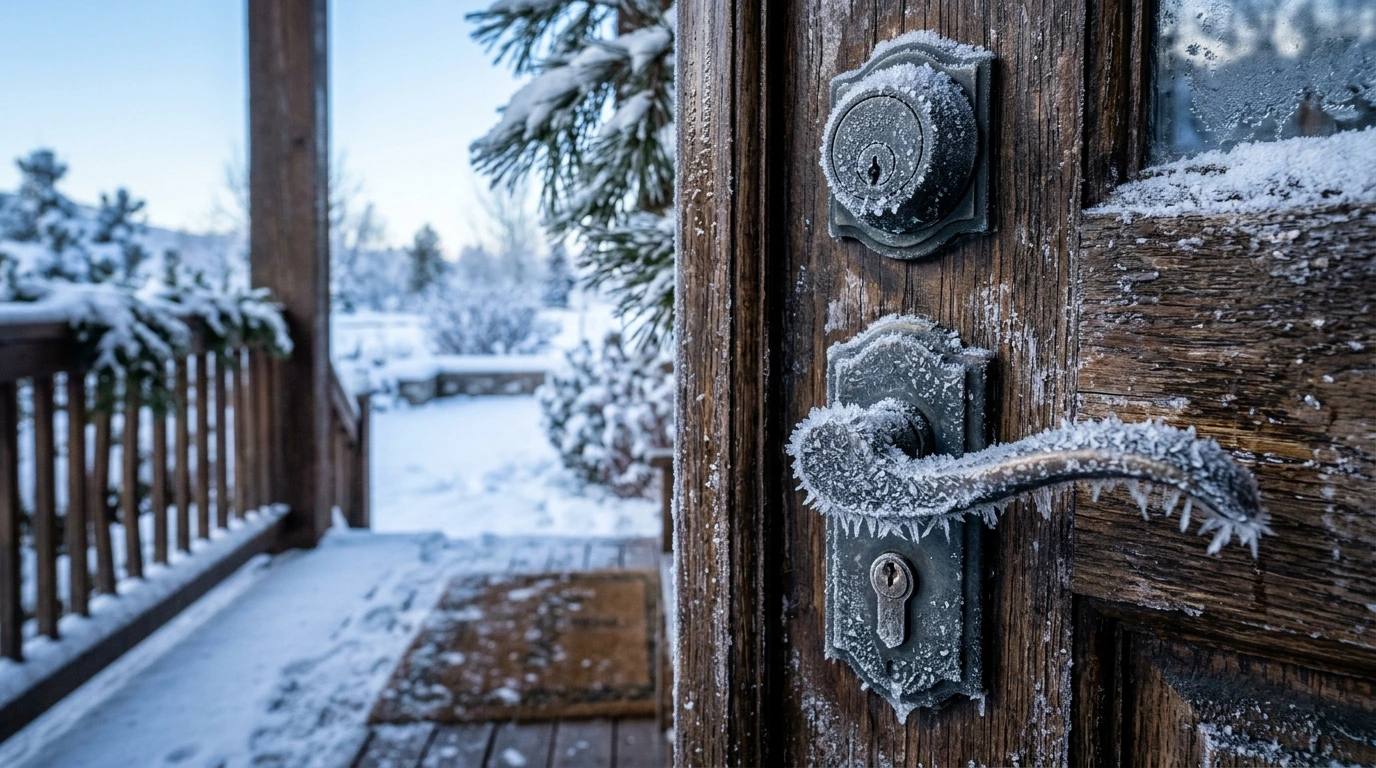
A frozen door lock always seems to strike at the worst moment: early in the morning, groceries in hand or kids waiting in the car. In a Quebec winter, freezing rain, snowmelt and condensation can all leave ice inside a lock cylinder, on a latch or along the weatherstripping. This guide explains why locks and handles freeze, how to thaw them without damaging the door, and the simple habits that keep it from happening again.
Why Door Locks and Handles Freeze
A lock freezes when water gets inside and turns to ice around the pins, the latch or the bolt. On the outside of the door, that water usually comes from freezing rain, wet snow blown against the door or meltwater dripping from a roof edge or canopy above the entrance. A sunny afternoon followed by a cold night is a classic recipe: snow melts, water runs into the keyway and freezes solid overnight.
Water can also come from inside the house. When warm, humid indoor air leaks around a door that does not seal well, it meets the cold metal of the lock and condenses. Over several days, that moisture builds up as frost in the latch or along the weatherstripping, and the handle becomes stiff or refuses to turn.
It helps to know which part is frozen before you act. A key that will not go in or will not turn points to ice in the cylinder. A handle that turns while the door stays shut usually means the latch or bolt is stuck in ice, or that the door itself is frozen to its weatherstripping or threshold.
How to Thaw a Frozen Door Lock Safely
The safe approach is gentle heat and patience. Many frozen locks free up within a few minutes if you warm the metal gradually rather than forcing the key. Start with the gentlest method and move on only if needed.
If you can get in through another door, warming the frozen door from the inside is often the easiest solution. Pointing a hair dryer at the lock from the interior side, or simply raising the heat in the entrance for a while, can release ice in the latch and bolt without adding any water.
- Lock de-icer: a small alcohol-based spray made for locks melts ice in the keyway quickly; it is flammable, so never use it near a flame. Keep one in your bag or car, not inside the house you are locked out of.
- Warm the key: hold it in your hand or against a hand warmer, insert it gently and wait a moment before turning.
- Hand warmer on the cylinder: press a disposable hand warmer against the lock for a few minutes.
- Hair dryer: aim it at the lock or latch on a low or medium setting, using an outdoor-rated extension cord plugged into a GFCI-protected outlet, and keep the cord out of snow and puddles.
- Gentle wiggling: once the key enters, move it back and forth slightly instead of forcing a full turn.
What Not to Do: Hot Water, Force and Open Flames
Pouring hot water on a frozen lock is the most common mistake. It may work for a moment, but the water runs deep into the mechanism and refreezes even harder, often within minutes. It can also crack the cold glass of a door and leave a sheet of ice on the step.
Force is the second trap. Turning a key hard in a frozen cylinder can bend or snap it, leaving half the key stuck inside and turning a small problem into a locksmith visit. Yanking a frozen handle can damage the latch or the strike, and prying at the weatherstripping with a screwdriver tears the very seal that keeps the cold out. If the lock still will not turn after gentle warming, call a locksmith rather than forcing the door.
Open flames do not belong anywhere near a door. A torch or lighter can scorch the finish, melt weatherstripping, damage fibreglass and warp plastic key heads or electronic components. Lock de-icers and many lubricants are also flammable, so a flame near a freshly sprayed lock is a real fire risk.
- No hot or boiling water: it refreezes inside the lock and on the step.
- No forcing the key: a broken key is far harder to deal with than ice.
- No torch or lighter on the door: heat damages finishes, seals and electronics.
- No prying at the seals: a torn weatherstrip lets drafts in all winter.
When the Whole Door Is Frozen Shut
Sometimes the lock turns freely but the door will not budge. In that case, ice has usually bonded the weatherstripping to the frame or the bottom sweep to the threshold. This often happens after a thaw followed by a hard freeze, or when snow is left packed against the bottom of the door.
Push firmly but evenly on the door near the frozen area. Warming the threshold from the inside with a hair dryer can often break the bond. Once the door opens, clear the snow and ice from the sill, dry the weatherstripping and wipe a thin coat of silicone on the rubber so it is less likely to stick again.
Patio sliding doors have their own version of the problem: ice and packed snow in the bottom track lock the panel in place. Do not force a frozen sliding panel, since that can damage the rollers or the lock; free the track first. Keep the track and its drainage holes clear during the winter. Remove snow from the outside of the door after each storm so meltwater has somewhere to go.
Preventing a Frozen Door Lock All Winter
Prevention starts in the fall. Clean the lock and apply a small amount of dry lubricant made for locks, such as graphite or a PTFE-based product, following the lock manufacturer's recommendations. Avoid heavy oils and greases, which thicken in the cold and attract dust that ends up jamming the pins.
Next, control the water, outside and in. The list below covers the main points; inside, keeping humidity reasonable and the weatherstripping in good shape reduces the condensation that freezes in the latch.
- Lubricate in the fall: a light dose of dry lock lubricant before the first freeze.
- Redirect drips: check gutters, canopies and roof edges above entrances.
- Clear snow promptly: do not let snow pile up against the door or threshold.
- Cover the keyway: a small cover or flap keeps freezing rain out of the cylinder.
- Check the seals: replace weatherstripping that is torn, flattened or missing.
Keypads, Smart Locks and Multipoint Locks in the Cold
Electronic and smart locks avoid the frozen keyway but bring their own winter quirks. Batteries lose power in the cold, so replace them before winter. Keep a physical backup key or another way in, and remember that a motorized bolt can still be blocked by ice in the strike. If that happens, warm the door from the inside rather than aiming hot air at the keypad for a long time.
Many modern exterior doors use multipoint locks that engage the frame at the top, middle and bottom of the door. They are designed to add security and compress the weatherstripping evenly, but if one point is iced up, the whole handle feels stiff. Keeping the door properly aligned and its strikes clear of ice helps these locks work smoothly.
If the handle on a multipoint door gets harder to operate every winter, the cause is often alignment rather than ice alone. A door that has shifted slightly puts tension on the bolts, and the cold makes it worse. Adjusting the hinges or strikes often helps; on a multipoint lock, follow the hardware manufacturer's instructions or have a professional make the adjustment.
When a Frozen Lock Points to a Door Problem: Free Estimate
An occasional frozen lock after freezing rain is normal. A lock or latch that freezes over and over, frost forming on the inside of the door or edges that are always cold is a different story. These are signs that warm indoor air is leaking around the door and condensing, usually because the weatherstripping is worn, the door is out of alignment or the frame is poorly insulated.
New weatherstripping and an adjustment may be enough. If the door is old, its frame damaged or its insulation poor, a new insulated door installed with proper sealing can help with comfort near the entrance; our guide to energy efficiency explains how air leaks and insulation affect a home in winter. You can also browse the options on our doors page.
If your entry door still freezes, sticks or lets in cold air every winter after new weatherstripping and an adjustment, a professional assessment is the logical next step. Unisson Groupe manufactures and installs windows and doors in Saint-Laurent and serves homeowners across Greater Montreal. Request a free in-home estimate to go over the door and the possible options. Note when and where the door freezes beforehand, since it helps pinpoint the cause.
Frequently Asked Questions
What is the fastest way to unfreeze a door lock?
A lock de-icer spray is usually the quickest option, since it melts ice in the keyway within moments. A warmed key, a hand warmer pressed on the cylinder or a hair dryer also work. Avoid hot water, which refreezes inside the lock.
Should I put oil in a frozen lock?
Heavy oils and greases are a poor choice for locks in winter, because they thicken in the cold and attract dirt. Use a dry lubricant made for locks, such as graphite or a PTFE-based product, following the lock manufacturer's advice.
Why does my door lock keep freezing?
Repeated freezing usually means water keeps reaching the lock, either from drips and freezing rain outside or from warm indoor air leaking around the door and condensing. Check the roof edge above the door, the weatherstripping and the door's alignment.
How do I open a door that is frozen shut?
Push firmly and evenly near the frozen area instead of forcing it, and warm the threshold or edge from the inside with a hair dryer if you can. Once it opens, clear the ice, dry the weatherstripping and wipe silicone on the rubber so it is less likely to stick again.
Do smart locks freeze in winter?
Smart locks have no keyway to freeze, but cold weakens their batteries and ice in the strike can still block the bolt. Replace the batteries before winter and keep a backup way in.