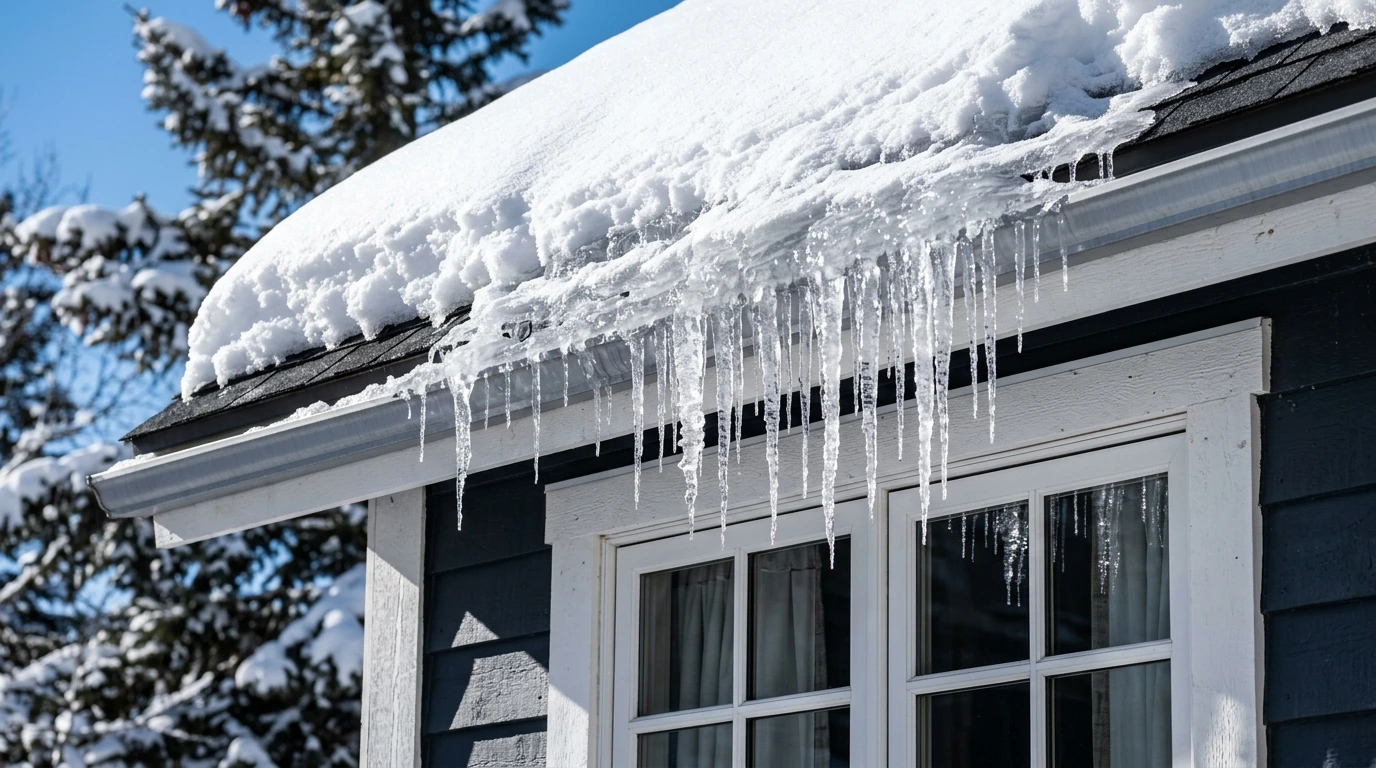
Ice dams and windows are a bad combination. When a ridge of ice forms along the edge of the roof, meltwater has nowhere to go and can work its way under the shingles, into the wall and down to the top of the window below. In a Quebec winter, with long freeze-thaw cycles and heavy snow on the roof, this is a frequent cause of stained ceilings, wet sills and swollen window trim. This guide explains how it happens, where to look and how to protect your openings.
How Ice Dams Form on a Quebec Roof
An ice dam starts in the attic. Heat escaping from the house warms the underside of the roof deck, and the snow lying on top of it melts even when the outdoor temperature is below freezing. The meltwater runs down the slope until it reaches the eaves, which overhang the wall and stay as cold as the outside air. There, it freezes again.
Day after day, this cycle builds a ridge of ice along the edge of the roof. Behind it, new meltwater pools in a small lake that sits on the shingles. Shingles are designed to shed water running downhill, not to hold back standing water, so the water eventually backs up under them and finds its way through nail holes and joints.
The usual causes are well known: not enough insulation in the attic, air leaks from the living space into the attic, poor ventilation under the roof deck, and heavy snow accumulation. Gutters clogged with leaves or ice can make the problem worse, but they rarely cause it on their own.
Why Ice Dam Meltwater Ends Up at Your Windows
Once water gets under the roofing, gravity takes over. It runs down the inside of the wall, along the sheathing or the studs, until it meets something horizontal. In many walls, the first horizontal obstacle below the eaves is the head of a window. The water collects on top of the frame, spreads along it and then drips down the sides or through the joints.
That is why ice dam damage so often shows up around windows rather than on the roof itself. You may see a brown stain on the drywall above the window, paint bubbling at the corners of the trim, or water dripping onto the interior sill on a mild afternoon. Windows directly below a valley, a dormer or a short roof overhang are the most exposed.
Water can also reach the window from the outside. Icicles and slush falling from the eaves land on the exterior sill, where they melt in the sun and refreeze at night. If the sill does not slope enough or the caulking has cracked, this water can seep into the joint between the window and the wall.
- Windows directly under the eaves, especially where snow stays on the roof longest
- Dormer windows and windows under a roof valley
- Windows below a short overhang or a flat roof section
- Basement windows below a downspout that freezes
Warning Signs to Watch for Around Your Windows
Ice dam leaks are often intermittent. They appear during a thaw or a sunny day and disappear when the cold returns, which makes them easy to forget until the next one. Keep an eye on your windows during and right after each mild spell, especially in late winter when the snow on the roof is deepest.
Some signs are visible from outside, others only from inside. If you spot several of them on the same wall, it is worth looking at the roof and the attic before the damage spreads to the insulation and the framing.
- Outside: a thick ridge of ice along the eaves, icicles hanging over a window, water stains running down the siding or brick.
- Window head: peeling paint, swollen wood trim or a gap opening above the frame.
- Inside wall: brown rings, bubbling paint or damp drywall above or beside the window.
- Interior sill: water pooling on the sill on a mild day, with no condensation on the glass.
- Smell: a musty odour near one window that suggests moisture inside the wall.
Protecting Window Sills and Frames From Meltwater
A properly installed window is designed to shed water that reaches it from above. A drip cap or head flashing over the frame directs water outward, and the exterior sill slopes away from the house so water runs off instead of pooling. Underneath, a sill membrane or sill pan catches any water that gets past the first line of defence and leads it back outside.
On older homes, these details are often missing or have deteriorated. Before winter, inspect the top and bottom of each exposed window. The caulking should be continuous and flexible, the flashing should be intact and the sill should not be cracked or soft. Clean out the drainage holes of sliding windows so water that gets into the track can escape.
During the winter, simple habits help. Gently knock down large icicles hanging over a window from a safe position, and clear heavy snow away from basement windows and from the base of patio doors. Never chip ice off a sill or frame with a sharp tool, since it is easy to cut the sealant or crack the PVC.
- Check that the exterior caulking is intact and not pulling away
- Confirm the sill slopes outward and is not soft or cracked
- Look for a drip cap or flashing above exposed windows
- Clean the weep holes of sliding windows before the first freeze
- Keep snow away from basement windows and door thresholds
Fixing the Cause: Attic Insulation and Ventilation
Protecting the windows limits the damage, but the real solution is to stop the ice dam from forming. That means keeping the roof deck cold so the snow does not melt from below. In most houses, this comes down to sealing air leaks between the living space and the attic, adding insulation where it is thin and making sure soffit and roof vents let air flow freely.
These are roofing and insulation jobs, and they should be assessed by a qualified roofer or insulation contractor. In the meantime, removing snow from the lower part of the roof with a roof rake used from the ground can reduce the amount of meltwater. Avoid climbing onto an icy roof and avoid chipping at the ice dam itself, which can damage the shingles and the gutters.
It also helps to check the attic hatch, recessed lights and plumbing or vent openings in the ceiling below the attic. These are frequent sources of warm, moist air that melts snow and can also cause frost inside the attic.
After a Leak: Checking the Window and the Wall
When the thaw is over, take time to understand what happened. Dry the area as quickly as possible, remove wet insulation if you can reach it and watch the stain over the following weeks to see if it grows. A single small stain that dries and never returns may only need repainting, but repeated leaks can soak the insulation, rot the window buck and the wood framing, and lead to mould inside the wall.
If the window itself is old, its frame is soft or the joint around it has been wet several times, it may be time to look at replacement. A new window installed with proper flashing, a sill membrane and a continuous air seal leaves meltwater fewer ways in, although it does nothing about the ice dam itself. You can read about how windows are installed and about energy efficiency to understand what a sound installation includes.
When to Call a Window Professional
If you are not sure whether water came from the roof, the window or condensation, an inspection of the opening can help sort it out. Call a roofer or insulation contractor for the attic and the eaves, and a window professional when the frame is soft, the sill is cracked, stains keep returning around the same window or the window is old enough that you are already considering replacing it. Looking at the frame, the sill, the flashing and the interior finish together usually shows whether the window can be resealed or whether replacement makes more sense.
Unisson Groupe manufactures and installs windows and doors and serves homes across Greater Montreal from Saint-Laurent. Have a look at our casement windows and other window styles, and request a free in-home estimate if one of your openings has been through one ice dam too many.
Frequently Asked Questions
Can an ice dam cause a window to leak?
Yes. Meltwater trapped behind an ice dam can back up under the shingles, run down inside the wall and collect on top of the window frame. It then drips down the sides or onto the interior sill, often during a thaw.
How do I tell an ice dam leak from window condensation?
Condensation forms on the glass and runs down to the sill, usually on cold mornings. An ice dam leak tends to appear on mild or sunny days, often with stains on the wall above the window and no moisture on the glass itself.
Should I remove ice from my roof myself?
It is safer to use a roof rake from the ground to remove snow from the lower part of the roof. Chipping at ice or climbing on an icy roof is dangerous and can damage shingles and gutters, so leave ice removal to a roofing professional.
Will new windows stop ice dam damage?
New windows cannot prevent an ice dam, which is a roof and attic problem. However, a window installed with proper head flashing, a sloped sill and a sill membrane generally sheds water better and can limit the damage if a leak happens.
When should I check my windows for ice dam damage?
Check them in the fall before the snow, during and after each winter thaw, and again in spring. Look for stains, swollen trim, soft frames and cracked caulking on the walls under the eaves.