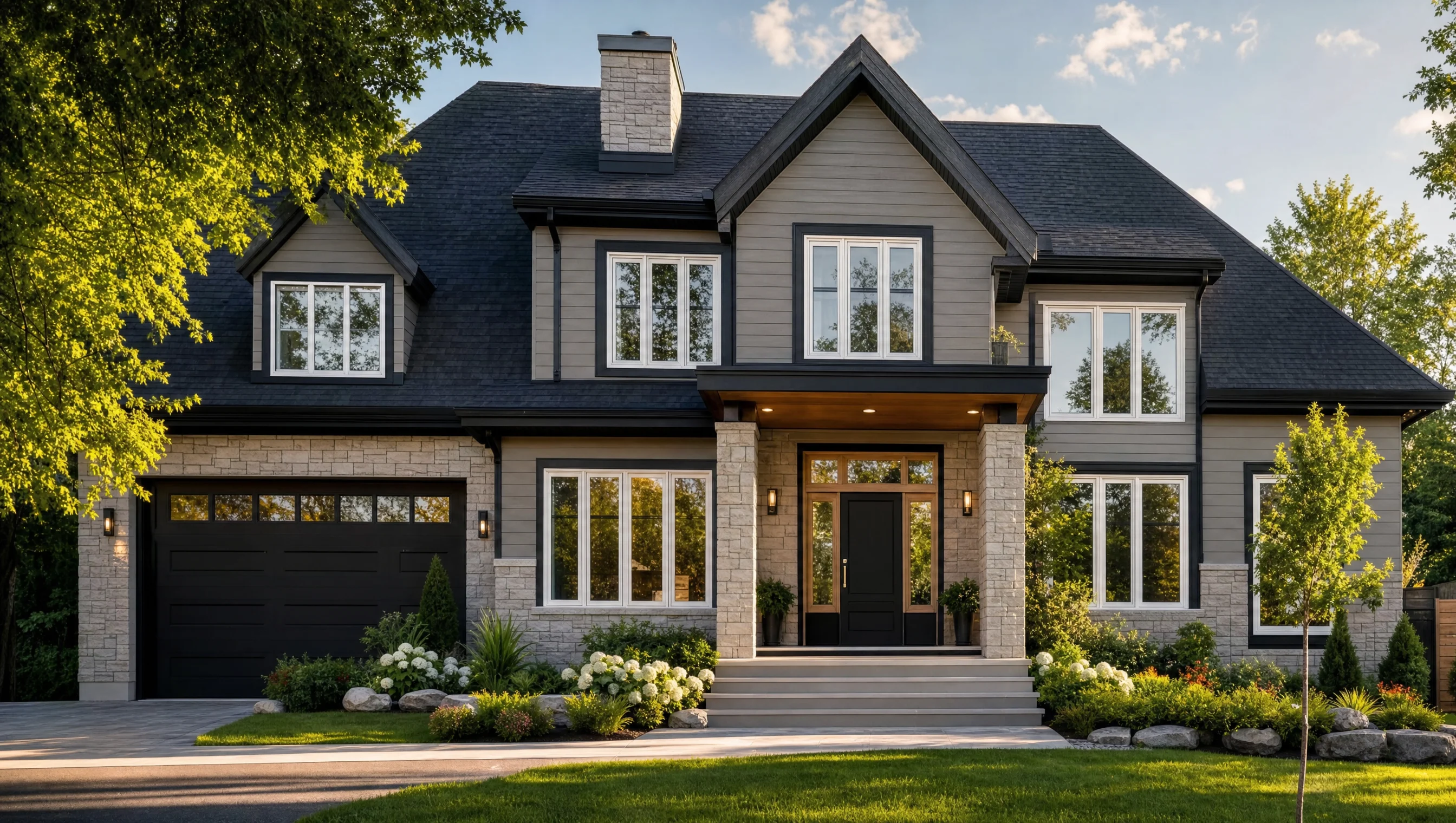
Summer is peak season for residential break-ins in Quebec — longer trips, open windows, and homes left empty for the cottage all play a part — and the patio door is often the easiest target a thief can find. Tucked away in the back yard, out of sight of the street, an older slider can be defeated in seconds with nothing more than a screwdriver and a lift. The good news: a few well-chosen upgrades turn that weak point into one of the hardest doors in the house to force.
Why Patio Doors Get Targeted
Three things make older patio doors attractive to intruders. First, location: a back-yard slider is screened from neighbours and the street, giving a thief the privacy to work. Second, hardware: older sliders rely on a single-point hook latch that can be defeated with a simple lift-and-pry move, popping the sash off its track in seconds. Third, frame strength: many older units use thin aluminum or unreinforced vinyl, so the keeper plate the latch engages is itself easy to bend or tear out.
Modern patio doors close that gap dramatically. A quality unit uses a multi-point lock that throws three or more bolts around the frame at once — typically hooks at top and bottom plus a central deadbolt — so there is no single point to attack. Anti-lift blocks in the track stop the lift-and-pry trick, and a steel-reinforced frame gives every bolt something solid to bite into.
It is worth being honest about the threat. The vast majority of break-ins are opportunistic, not professional: an intruder testing a back door, finding it weak, and being in and out in under a minute. The goal of good security is not to build a vault — it is to make your door enough trouble that the opportunist moves on.
Security Upgrades for Doors You Already Have
You do not always need a new door to fix a vulnerable one. Several upgrades meaningfully harden an existing patio door, and most are affordable enough to tackle before the summer travel season. Tackle them in order of impact: the lock first, then the frame, then the glass and the technology.
- Add foot bolts (top and bottom) to hinged French patio doors so each leaf pins into the frame and threshold
- Drop an after-market security bar or “charley bar” into the track of a slider to physically block it from opening
- Replace a single-point hook latch with full multi-point hardware engaging three or more points
- Reinforce the strike plate and keeper with longer screws driven into the framing, not just the jamb
- Install anti-lift pins or blocks so the sliding panel cannot be lifted out of its track
- Consider a smart lock with auto-locking and phone alerts so the door is never accidentally left unlocked
Glass Choices That Buy You Time
A lock is only as strong as the glass beside it — there is little point in a five-point lock if an intruder can simply punch through the pane and reach the handle. Patio doors are mostly glass, so the glazing is a genuine security decision, not just a thermal one.
Tempered glass, the most common option, shatters into small dull pebbles when broken. That is safer for your family, but it also means a determined intruder can clear the opening quickly. Laminated glass behaves very differently: a tough interlayer bonds the panes together so that, like a car windshield, the glass cracks but holds in place after impact. Breaking through laminated glass is loud, slow, and conspicuous — exactly the kind of effort an opportunist wants to avoid.
For the best of both worlds, many Quebec homeowners spec a sealed unit with laminated glass on the outer pane and tempered on the inner, paired with Low-E and argon so security never comes at the expense of winter performance. The upgrade adds a modest premium but is far cheaper than the loss it can prevent.
Free Habits That Matter as Much as Hardware
The best lock in the world does nothing if the door is left unlatched. A surprising share of summer break-ins involve doors that were simply unlocked — left ajar for the dog, for airflow, or because the family stepped out to the back yard. Make locking the patio door part of your leaving-the-house routine, the same way you check the front door and the stove.
Cut down on the cover that makes a back-yard door appealing. Trim shrubs and hedges near the patio so the door is visible from a neighbour’s window, add a motion-activated light over the deck, and keep ladders, patio furniture, and recycling bins from being stacked into an improvised climbing aid or pry tool. Visibility and light are deterrents that cost almost nothing.
If you head to the cottage or travel for a stretch, make the house look lived-in. Put a couple of interior lights on timers, pause mail and parcel deliveries, and ask a neighbour to move the car or bring in flyers. A patio door that is hard to force matters far more when the house also looks occupied.
- Lock the patio door every time you leave, even for a quick errand
- Trim landscaping so the door is visible from the street or a neighbour
- Add a motion-sensor light over the deck or patio
- Use timers on interior lights when you are away at the cottage
- Never leave a slider “cracked open” on its latch overnight
Buying New: A Security Spec Sheet
If your patio door is aging anyway, replacing it is the cleanest path to real security — you get a modern lock, a stronger frame, and better energy performance in one project. When you order, treat security as a line-item spec rather than assuming it is included, and ask the manufacturer to confirm each point in writing.
At a minimum, specify a multi-point locking system, laminated glass on the outer pane, reinforced strike plates anchored into the framing, and a steel-reinforced frame and sash. Anti-lift hardware should be standard on any quality slider. These features add modest cost but transform how the door performs against a forced entry, and they pair naturally with the thermal upgrades — triple-pane, Low-E, argon — that you want for a Quebec winter anyway.
There is a financial bonus worth checking. Many Quebec home insurers offer a discount of roughly 5 to 10% for a monitored alarm system, and upgrading vulnerable entry points is exactly the kind of improvement that supports a lower premium. To compare secure models and finishes, see our patio doors page, or request a free estimation for your home. We build our doors locally in Saint-Laurent and back every installation with a long-term warranty.
Frequently Asked Questions
Do smart locks work on patio doors?
Yes. Several smart-lock models are designed to retrofit standard multi-point patio doors, adding auto-locking, keypad or phone entry, and alerts if the door is left open. They are most effective layered on top of solid mechanical hardware, not as a replacement for it.
What is the strongest patio door lock?
A five-point lock is the gold standard: hook bolts at the top and bottom plus a central deadbolt and shootbolts, all thrown with a single handle motion. Spreading the locking points across the frame removes the single weak spot that opportunists rely on.
Is laminated glass worth it for security?
For a patio door, yes. Laminated glass holds together after impact like a windshield, so an intruder cannot simply punch through to reach the handle. Breaking it is slow, loud, and conspicuous — a strong deterrent against the quick, opportunistic break-ins that make up most summer incidents.
Can I make my old slider more secure without replacing it?
Often, yes. A track security bar, anti-lift pins, a reinforced strike plate, and an upgraded multi-point latch can dramatically harden an existing slider. If the frame itself is thin aluminum or badly worn, however, replacement is usually the better long-term value.
Does upgrading security lower my home insurance?
It can. Many Quebec home insurers offer roughly 5 to 10% off for a monitored security system, and reinforcing vulnerable entry points like patio doors supports that discount. Ask your insurer which specific upgrades qualify before you buy.
Which is the bigger break-in risk: a slider or a French patio door?
Both can be vulnerable when older. Sliders are most often attacked through the lift-and-pry trick on a single-point latch, while hinged French doors can be forced where the two leaves meet. In each case, multi-point locking and foot bolts are what close the gap.