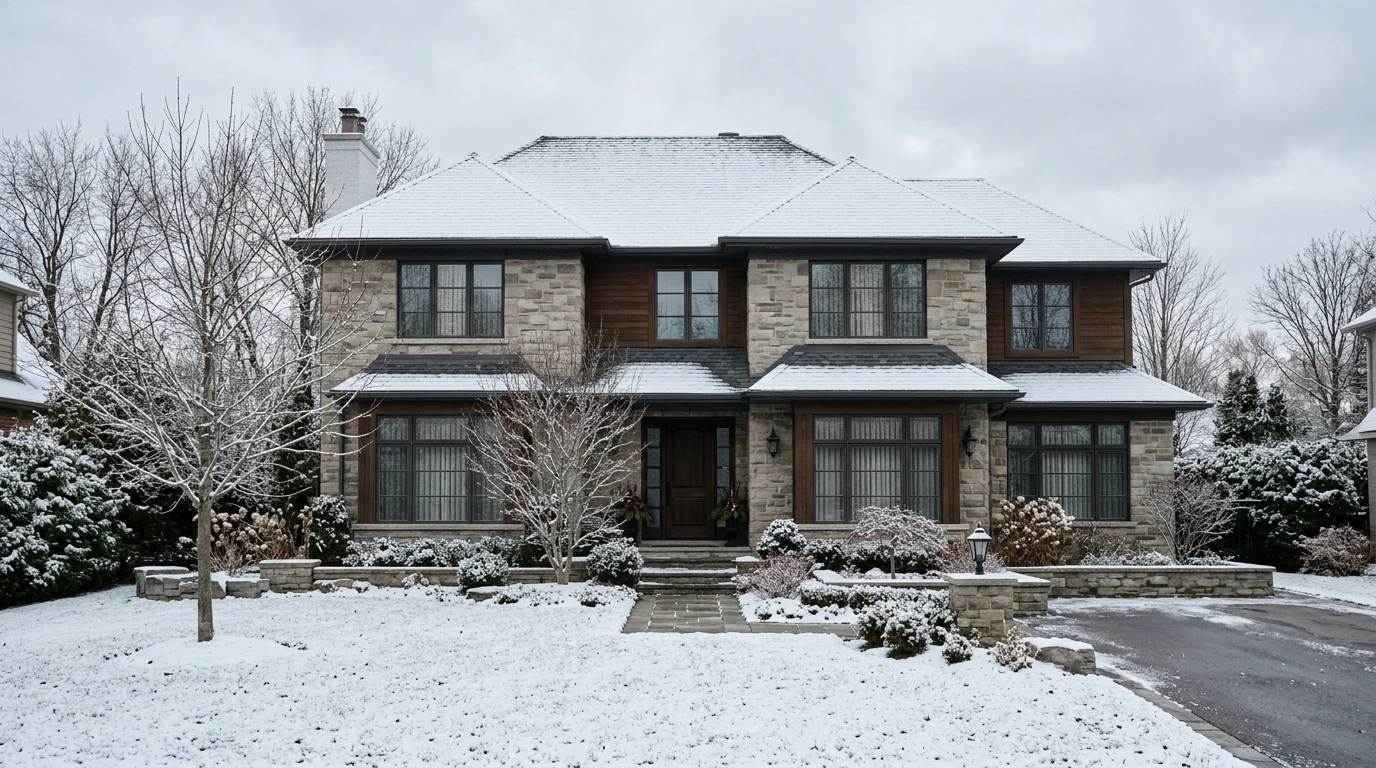
A good snowbird home checklist covers more than turning down the thermostat and stopping the mail. When a Quebec house sits empty for weeks or months, its windows and doors become the first line of defence against cold, moisture, snow and intruders, with nobody there to notice a problem early. A few hours of preparation before you leave can help prevent frozen seals, condensation damage and a door that will not close on your return. Here is what to check, in a practical order.
The Snowbird Home Checklist: Why an Empty House Is Different
In an occupied house, small problems are noticed quickly: a draft near a window, water on a sill, a door that sticks. In an empty house, the same problem can grow for weeks. A little ice forming at the bottom of a patio door can build up until the door is frozen shut, and a slow leak around a window can soak the drywall before anyone sees it.
The indoor climate also changes when nobody lives in the house. With the heat lowered and no cooking or showers, humidity drops over time, but any moisture that remains tends to collect on the coldest surfaces, usually the glass and frames. Closed curtains and blinds pressed against the windows make those surfaces even colder.
Before you leave, also read your home insurance policy. Many policies have conditions for unoccupied homes, such as regular visits by a responsible person. Ask your insurer what applies to you, and keep a record of the checks you make.
Lock and Secure Every Window and Door
Go through the house room by room and lock every window, including the basement and upper floors. On casement and awning windows, locking also pulls the sash tight against the weatherstripping, which helps the seal through the winter. Check that every sash is fully closed before you lock it, then fold or remove the crank handles.
Doors deserve the same attention. Check that the entry door latches and locks without force, and that multipoint locks engage at every point. A sliding patio door can be reinforced with a security bar in the track or a pin through the frame. Do not forget the door between the garage and the house, which is often left unlocked out of habit.
Timers on a few lamps and leaving blinds in a normal position help the house look lived in. Avoid leaving visible signs of absence, such as a note on the door or a pile of flyers. Ask a neighbour to pick up anything left at the door between visits.
- Lock every window, including the basement and attic
- Fold or remove crank handles on casement and awning windows
- Check that all lock points engage on entry and garden doors
- Add a bar or pin to sliding patio doors
- Lock the garage-to-house door and any storm doors
Check Seals, Caulking and Door Sweeps
Weatherstripping and exterior caulking are what keep snow, wind and meltwater out. Before you leave, look at the seals around each door and the operable windows. Flattened, torn or missing pieces should be replaced while you are still there, because a gap that lets in a little air in November can let in snow and ice in February.
Walk around the outside of the house and look at the caulking where the frames meet the cladding. Cracks or gaps are entry points for water, especially above windows where meltwater runs down the wall. Check the door sweeps and thresholds too: a draft at floor level often means ice can form on the inside of the sill.
If you find a window that no longer closes tightly or a door that has dropped out of alignment, it is better to have it looked at before winter than to discover the damage when you come back. Our page on energy efficiency explains how air leaks affect the whole house. Sealing them before you leave also makes the house easier to keep at a safe temperature.
Manage Heat and Humidity in a Vacant Home in Winter
Never shut off the heat completely in a Quebec winter. Keep the house at a safe minimum temperature, as recommended by your heating contractor or insurer, so pipes do not freeze and the frames and seals do not suffer from extreme cold indoors. A programmable or connected thermostat can help you keep an eye on it from a distance. Many owners also shut off the main water supply before a long absence; ask your plumber or insurer whether that is advisable for your house and heating system.
Turn off any humidifier and empty it. Leave interior doors open so warm air can circulate, and raise blinds or leave curtains slightly open so heat can reach the glass. When heavy curtains are pressed against a window for months, the glass gets colder and condensation or frost can form behind them, sometimes leading to mould on the sill.
If your house tends to have condensation in winter, a dehumidifier with a drain hose, or ventilation settings recommended by a professional, may help. Ask the person checking the house to look for water on the sills during each visit. Caught early, condensation is much less likely to turn into stained sills or mould.
Plan for Snow and Ice Around Doors and Windows
Snow is a bigger issue when nobody shovels every day. Arrange snow removal not only for the driveway but also for the entry steps, the patio door and any basement window wells. Snow piled against a patio door can melt during a mild spell and refreeze in the track or under the threshold.
Clean the gutters before you leave so meltwater does not overflow down the wall above your windows, and check for ice dams on the roof edge if your house is prone to them. Window wells can be fitted with covers that keep snow out while letting some light in; if a basement bedroom relies on that window as an emergency exit, choose a cover that can be opened easily from the inside. Make sure whoever clears the snow knows where the window wells are, so they are not buried or damaged by a snowblower.
- Patio doors: keep the exterior threshold and track clear of snow.
- Window wells: clear them or cover them for the season.
- Gutters: clean them so meltwater does not run over the windows.
- Entry steps: include them in your snow removal contract.
A Simple Checklist for the Person Checking Your House
Whoever visits the house while you are away, a family member, neighbour or paid service, will do a better job with a written checklist. Keep it short and specific, and ask them to send you a photo or a message after each visit. Give them the contact information of a heating contractor, a plumber and a window and door company in case something needs attention.
Agree in advance on what to do if they find a problem. A frozen door should never be forced or heated with a torch or heat gun, and water on a sill should be wiped up, photographed and reported. Clear instructions prevent well-meaning repairs that make things worse.
- Is the temperature where it should be?
- Is there frost, ice or water on any window or sill?
- Do all doors still latch and lock normally?
- Is snow piled against any door, patio door or window well?
- Is there a musty smell or visible mould near windows?
- Are there drafts or cold spots that were not there before?
Before or After the Trip: Get a Free Estimate
If your checklist turns up windows that fog between the panes, frames that are cracked or doors that no longer seal, it is worth planning repairs or replacement. Some issues can wait for spring, but others are better handled before you leave. A window that no longer locks or a door that no longer seals is worth fixing before a long absence.
Unisson Groupe manufactures and installs windows and doors in Saint-Laurent and serves homeowners across Greater Montreal. Browse our exterior doors and windows, then request a free in-home estimate at a time that suits your travel plans. It is a chance to sort out what needs attention now and what can wait until you return.
Frequently Asked Questions
What temperature should I leave my house at when I go away for the winter?
Never turn the heat off completely. Keep a safe minimum temperature recommended by your heating contractor or insurer, high enough to protect the pipes and keep the windows and doors from extreme indoor cold.
Should I close the blinds when I leave for the winter?
Leave them in a normal position, partly open if possible. Heavy curtains or blinds pressed against the glass for months make the window colder and can trap condensation and frost behind them.
How do I secure a sliding patio door while I am away?
Lock it, then add a security bar in the bottom track or a pin through the frame. Make sure the exterior side of the door is included in your snow removal plan so ice does not build up in the track.
Does home insurance cover an empty house in winter?
Coverage for unoccupied homes varies by policy and often comes with conditions such as regular visits. Read your policy and ask your insurer before you leave.
Is it worth replacing old windows before leaving for the winter?
If a window no longer closes, the frame is damaged or the seals have failed, dealing with it before a long absence can reduce the risk of damage. The right solution depends on the windows; a free in-home estimate can help you decide what makes sense.