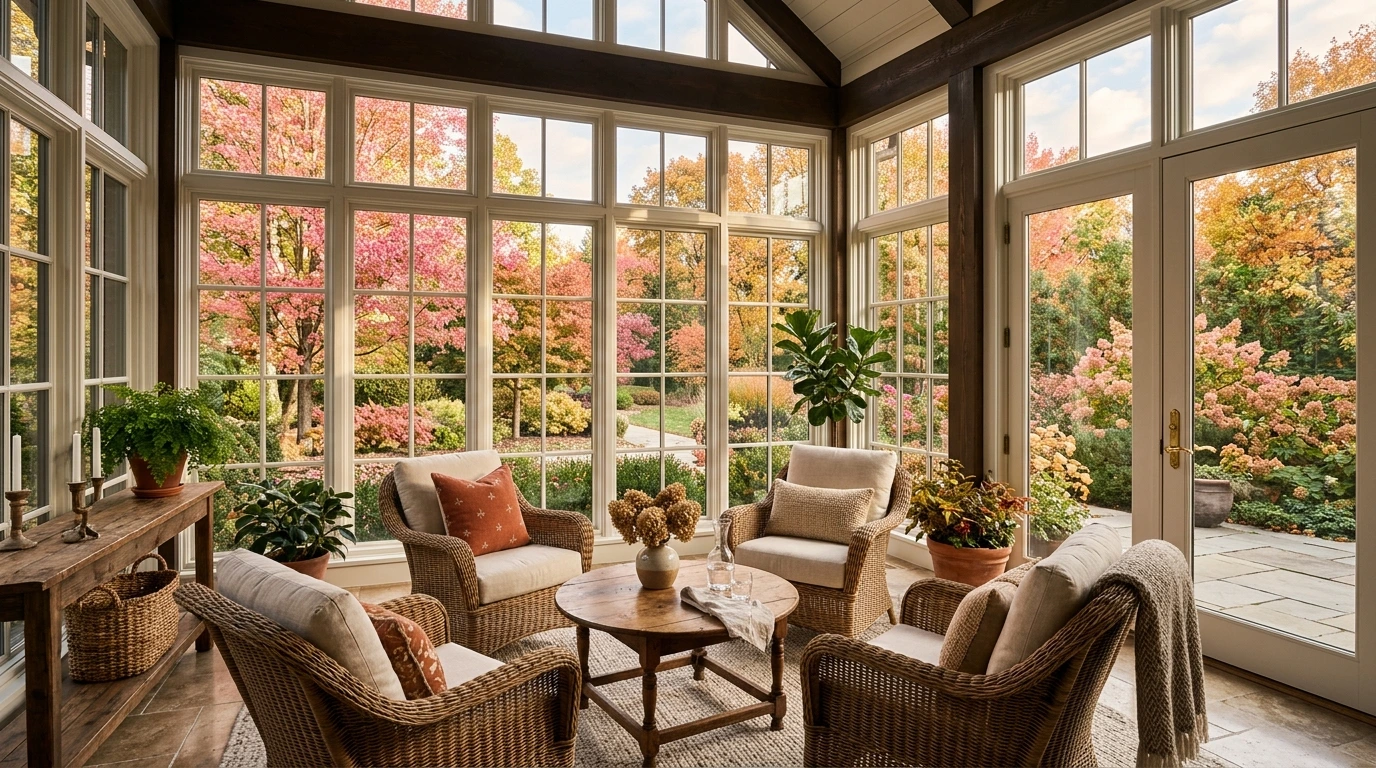
Choosing three season room windows starts with one question: will the room be used only from spring to fall, or all year long? A screened porch turned into a three-season room needs very different windows and doors from a heated four-season sunroom that is part of the house. This guide explains the difference, the window and door options that suit each, and how to manage sun, ventilation and winter in a Quebec sunroom.
Three-Season Room or Four-Season Sunroom: Know the Difference
A three-season room is an enclosed space, often built on a deck or an old porch, that is not heated or insulated like the rest of the house. It stretches the outdoor season in spring and fall, keeps insects out in summer and is usually closed off during the coldest months. Its walls are mostly windows and screens, and its comfort depends largely on the weather.
A four-season sunroom, by contrast, is a true addition. It has an insulated floor, walls and roof, a source of heat and windows chosen to perform in winter like those in the rest of the house. It is used all year and becomes part of the living space.
The choice affects everything that follows, from the type of glass to the door between the house and the room. It can also affect permits, since enclosing a porch or building a heated sunroom may count as an addition in many municipalities. Check with your city or borough before you start, and decide early how you really want to use the space.
Three Season Room Windows: What to Look For
In a three-season room, windows are mainly about light, views and fresh air. Large openings that let the breeze through, with good screens, matter more than maximum insulation. At the same time, the windows must handle big temperature swings, humidity and heavy rain without leaking or warping.
Sliding windows are a natural fit because they open wide without swinging into the room or onto the deck. A double slider lets you open either side, which helps steer the breeze. Casement and awning windows also ventilate well and can be combined with fixed panels to maximize the glass.
Frame material is worth a thought. uPVC windows resist moisture, do not need painting and generally stand up well to the humidity of an unheated room. Even in a room closed for the winter, double glazing can help reduce condensation and makes spring and fall evenings more pleasant.
- Generous opening area: enough operable windows to create a cross-breeze on warm days.
- Quality screens: full screens that are easy to remove, clean and store.
- Moisture-resistant frames: materials that will not rot or swell in an unheated space.
- Good drainage: sills and frames that shed rain away from the floor.
- Easy operation: hardware you can use every day without effort.
Windows for a Heated Four-Season Sunroom
A four-season sunroom has far more glass than a typical room, which makes the windows the most important part of its envelope. Without good windows, the room is cold in January and too hot in July. High-performance double or triple glazing, warm-edge spacers and insulated frames are the starting point.
Low-emissivity glass is especially useful in a sunroom. Some low-E coatings are designed to let solar heat in during winter, others to limit heat gain in summer, and the right choice depends on the orientation of each wall. A south-facing sunroom can collect welcome winter sun but may overheat in summer, while a west-facing room gets intense afternoon sun.
Fixed windows maximize glass and light, while operable units are essential for ventilation. A common approach combines large fixed panels with casements or awnings placed where they can create airflow. Ask your window professional to review each wall separately rather than ordering the same unit everywhere. Glass close to the floor, glass in and beside doors and any sloped or overhead glazing generally call for safety glass, tempered or laminated; confirm the requirements for your project with your contractor or municipality.
Doors Between the House, the Sunroom and the Yard
The door that connects the house to a three-season room is often overlooked. Since the room is unheated in winter, that door is really an exterior door and should be insulated and weatherstripped like one. Leaving an old interior door or an uninsulated patio door in that spot often means cold air and condensation all winter.
For the opening from the sunroom to the yard, a patio sliding door saves space and gives a wide view, which suits a room where furniture fills much of the floor. Hinged garden doors open wider and seal by compression, a good choice for a four-season room exposed to wind. In both cases, screens, a solid threshold and good drainage at the sill matter.
Think about traffic too. If the sunroom becomes the main path to the backyard or the pool, its door will see heavy use in summer. Choose hardware and a threshold that can take it.
Managing Sun, Heat and Ventilation
A room made mostly of glass reacts quickly to the weather. A sunny spring afternoon can make it uncomfortably hot, and the same room cools down fast after sunset. Managing that swing is a matter of glass, ventilation and shade working together.
Floors and furniture matter as well. Dark surfaces absorb heat, while fabrics and wood fade in strong sun, so glass that filters part of the sun's ultraviolet rays can help slow fading, along with blinds on the sunniest walls. In a four-season room, heating and cooling should be planned along with the windows, not as an afterthought.
- Cross-ventilation: place opening windows on at least two sides so air can flow through.
- High openings: awning windows near the top let rising warm air escape.
- Exterior shade: overhangs, awnings or trees block summer sun before it reaches the glass.
- Interior coverings: blinds or shades help control glare and evening heat loss.
- Glass by orientation: choose coatings wall by wall according to sun exposure.
Winterizing a Three-Season Room in Quebec
At the end of the fall, a three-season room needs a short routine to come through winter in good shape. Close and lock every window so the sashes seal against their weatherstripping, and store the screens if the manufacturer recommends it so ice and snow do not damage them. Keep the door between the house and the room closed to stop warm, humid indoor air from condensing on the cold glass.
Watch the roof and the base of the walls. Snow and ice should not build up against the windows or the door, and meltwater must be able to drain away from the floor. If you store furniture or plants in the room, leave space along the walls so air can circulate and mould does not take hold.
- Close and lock all windows: the lock presses the sash against the seals and helps keep snow out.
- Store or protect screens: follow the manufacturer's advice for winter.
- Keep the house door closed: limit the humid air reaching the cold room.
- Clear snow from walls and door: prevent ice build-up and water infiltration.
- Check after storms: look for leaks, drafts or ice at sills and thresholds.
Planning Your Sunroom Windows and Doors: Free Estimate
Whether you are enclosing a porch, renovating a three-season room or planning a new four-season sunroom, start by deciding how you will use the space and in which months. Then look at orientation, views, privacy and how the room will connect to the house and the yard. Those answers point naturally toward the right windows, glass and doors.
A professional opinion is especially useful when you plan to heat the room, when existing windows leak or fog up, or when the frames and sills show soft wood or water stains. Unisson Groupe manufactures and installs windows and doors in Saint-Laurent and serves homeowners across Greater Montreal. Request a free in-home estimate to review the openings of your sunroom project and the window and door options that suit it. If the project includes structural work, have your contractor's plans on hand so the windows and doors can be planned with them.
Frequently Asked Questions
What type of windows are best for a three-season room?
Sliding, casement and awning windows with good screens are common choices because they ventilate well. Moisture-resistant frames such as uPVC suit an unheated room. The best mix depends on the size of the room, its exposure and how much you want to open it up in summer.
Do I need double glazing in a three-season room?
It is not strictly necessary for a room closed off in winter, but double glazing can reduce condensation and make spring and fall evenings more comfortable. If you might heat the room one day, choosing better glazing now can save you from replacing the windows a second time.
Can a three-season room become a four-season sunroom?
Often, but it usually takes more than new windows: the floor, walls and roof need insulation, and heating must be added. Such a conversion may require a permit, so check with your municipality and have the structure assessed first.
What door should separate the house from a three-season room?
Since the room is unheated in winter, the door between it and the house should be an insulated, weatherstripped exterior-grade door. An interior door in that spot tends to let cold air in and can lead to condensation.
How do I keep a sunroom from overheating in summer?
Combine low-E glass chosen for each orientation, opening windows on more than one side, exterior shade and interior blinds. High awning windows help warm air escape. In a four-season room, plan cooling along with the windows.