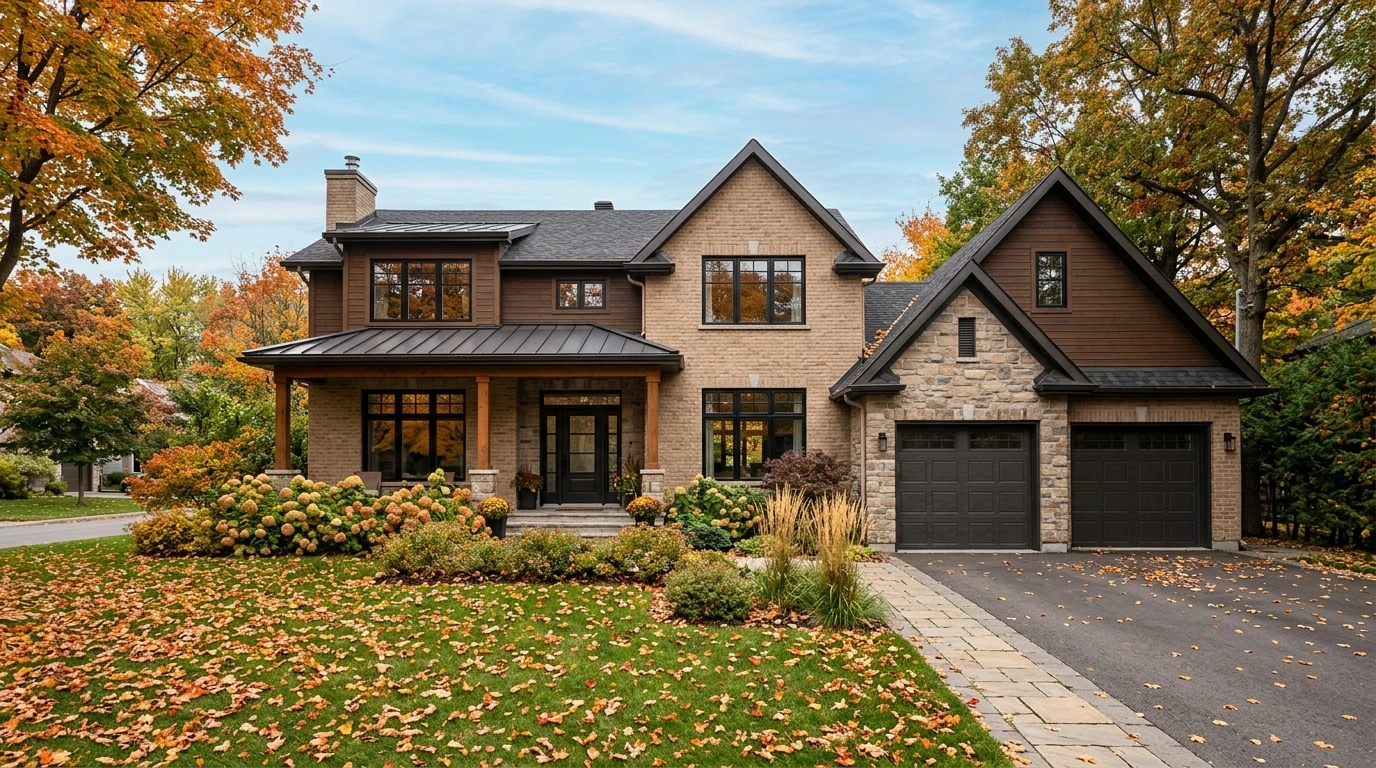
Shopping for windows and doors on the North Shore of Montreal is not quite the same as doing it on the island. Homes in Terrebonne, Blainville, Repentigny, Saint-Eustache and Mascouche are often more exposed to open wind, sit near rivers and lakes, and were built in waves that each came with their own window styles. This guide walks you through what to look at on your house, which products suit North Shore conditions, and how to plan the project from first measurement to final caulking.
What Makes North Shore Houses Different
The North Shore grew in several waves. Older village cores and riverside streets sit next to postwar bungalows, split-levels from the seventies and eighties, and large subdivisions built much more recently. Each period used different window types and installation methods, so two houses on neighbouring streets can need very different work.
Many newer subdivisions in Terrebonne, Blainville and Mascouche were finished with builder-grade sliding windows and basic steel entry doors. Those products did their job when the house was new, but after a couple of decades it is common to see tired weatherstripping, fogged sealed units and patio doors that no longer close smoothly. Older bungalows often have a mix of original windows and partial replacements done over the years.
Before you compare products, take a walk around the house with a notebook. Write down every opening, its approximate size, its style and its condition. That simple inventory makes every later step easier, from comparing quotes to deciding what can wait.
Wind, Snow and Water Exposure North of the Island
Large lots, open fields and wide boulevards mean many North Shore homes take the wind head on. Winter storms push cold air and snow against the windward facades, and wind-driven rain in the spring and fall tests every joint around the frame. Homes close to the Rivière des Mille Îles, the St. Lawrence near Repentigny or Lac des Deux Montagnes near Saint-Eustache can also deal with more humidity and stronger gusts.
That exposure changes what matters most. Airtightness and water resistance become just as important as the glass itself. A window with good compression seals, a well-flashed sill and a properly insulated gap between the frame and the wall usually feels very different on a windy January night from one that relies only on caulking.
Look at which side of your house faces the prevailing wind and which side gets the afternoon sun. Those two facades usually show wear first, and they are where better glass and tighter window styles make the most noticeable difference.
Choosing Windows and Doors for the North Shore Climate
For windows on exposed walls, styles that close by compression, such as casement and awning windows, generally seal more tightly than sliders because the sash is pressed against the gasket when you lock it. Sliding and hung windows still have their place, for example in basements or where an opening sash would hit a deck or a walkway, but they depend more on the quality of their brush seals.
On the glass side, a Low-E coating and an insulating gas fill are a common starting point for a Quebec home today. On north-facing or very windy facades, many homeowners consider triple glazing for extra comfort near the glass. Warm-edge spacers help keep the edges of the glass warmer, which can reduce frost and condensation along the bottom of the pane in deep cold.
For doors, the main entry and the patio door to the backyard deserve the most attention. A steel or fiberglass entry door with a solid frame and multipoint locking, and a patio door with a well-designed sill that drains water outward, generally cope better with snow piled against them than a worn builder-grade unit. Whatever the model, check that the threshold sits level and that the bottom sweep actually touches it.
- Exposed facades: favour casement or awning windows with good compression seals.
- Glass: Low-E coating, gas fill and warm-edge spacers as a starting point; triple glazing where comfort matters most.
- Frames: PVC frames resist moisture and do not need regular painting; check the colour options if you want to match existing trim.
- Entry doors: insulated core, solid frame, adjustable threshold and quality weatherstripping.
- Patio doors: a sill that sheds water outward and rollers and locks that are easy to adjust.
Notes for Terrebonne, Blainville, Repentigny, Saint-Eustache and Mascouche
Every municipality on the North Shore has its own permit process and its own rules for changes to the look of a house. Replacing windows of the same size and style is often treated differently from enlarging an opening, adding a patio door or changing the colour of a facade. Rules can also vary by sector, so the only reliable answer comes from your city's urban planning department.
Some areas deserve extra care. Older sectors such as Vieux-Terrebonne or the historic core of Saint-Eustache may have guidelines about materials, colours or window proportions. Newer subdivisions sometimes carry neighbourhood standards from the original development. In every case, check before you order, not after the windows are made.
For a closer look at local housing styles, see the page for your town below.
- Windows and doors in Terrebonne
- Windows and doors in Blainville
- Windows and doors in Repentigny
- Windows and doors in Saint-Eustache
- Windows and doors in Mascouche
Signs Your North Shore Windows and Doors Are Due
Some signs are obvious, like fog trapped between the panes or a door you have to slam to latch. Others are quieter. A room that is always colder than the rest of the house, frost forming in the same corner every winter, or curtains that move on windy days all point to air leaking around or through a window.
Check the outside as well. Cracked caulking, soft wood around a sill, peeling paint on old frames and gaps under exterior trim let water into the wall. On doors, look at the bottom of the frame and the threshold, where melting snow sits for months. Catching water damage early keeps the job limited to the window or door instead of the wall around it.
- Condensation or fog between the panes of a sealed unit
- Drafts you can feel with the back of your hand on a windy day
- Sashes or doors that stick, sag or no longer lock easily
- Ice or heavy frost building up on the inside of the frame
- Soft, stained or rotting wood around sills and door frames
Planning the Project Step by Step
Start with your inventory and decide what is urgent. Failed seals, rot and doors that do not lock properly come first. Windows that are simply old but still tight can sometimes wait for a second phase, as long as you plan the styles and colours so everything matches in the end.
When you ask for quotes, make sure each one describes the same thing: the window or door style, the glass package, the frame material, the exterior finish and, above all, the installation method. Ask how the old units will be removed, how the gap around the new frame will be insulated and sealed, and how the exterior will be finished with flashing and capping.
Timing matters on the North Shore too. Spring through fall is the most comfortable season for exterior work, but installations can also be done in colder months when each opening is closed up the same day. Whatever the season, plan the order with any other exterior work, such as a new roof or siding, so nothing has to be undone later.
Get a Free Estimate for Your North Shore Home
Unisson Groupe manufactures and installs windows and doors from its base in Saint-Laurent, Montreal, and serves homeowners across the North Shore, including Terrebonne, Blainville, Repentigny, Saint-Eustache and Mascouche. Every house is different, and the right choice depends on its walls, its exposure and how you live in it. A professional visit is most useful when you see warning signs such as fog between the panes, soft wood or frost that returns every winter, or when you plan to replace several openings and want styles, glass and installation details laid out side by side.
If you would like a clearer picture of what your home needs, you can request a free in-home estimate. Bring your inventory notes: they make it easier to go over each opening, ask your questions and decide what should be done now and what can wait.
Frequently Asked Questions
Do I need a permit to replace windows on the North Shore?
It depends on the municipality and on the work. Replacing windows of the same size and style is often simpler than enlarging an opening or changing the appearance of the house. Contact the urban planning department of your city, whether it is Terrebonne, Blainville, Repentigny, Saint-Eustache or Mascouche, before ordering.
Are casement windows better than sliding windows for a windy lot?
Casement and awning windows close by compression, so they usually seal more tightly against wind than sliders. Sliding windows remain useful where an opening sash would be in the way, such as next to a deck or walkway. Many homes use a mix of both.
Is triple glazing worth considering on the North Shore?
Triple glazing adds comfort near the glass and helps on cold, windy facades, especially facing north. Whether it makes sense for your house depends on the room, the size of the windows and your priorities. An in-home visit is the best way to decide window by window.
How much does it cost to replace windows and doors in Terrebonne or Blainville?
There is no single answer, because the cost depends on the number of openings, the styles, the glass and the installation work each wall requires. The only reliable figure is a written quote for your house. You can request a free estimate to get one.
Can windows be installed in winter?
Yes, window and door installation can be done in cold weather when each opening is removed, installed and sealed the same day. Spring to fall is more comfortable for exterior finishing, but winter installation is a common practice in Quebec.