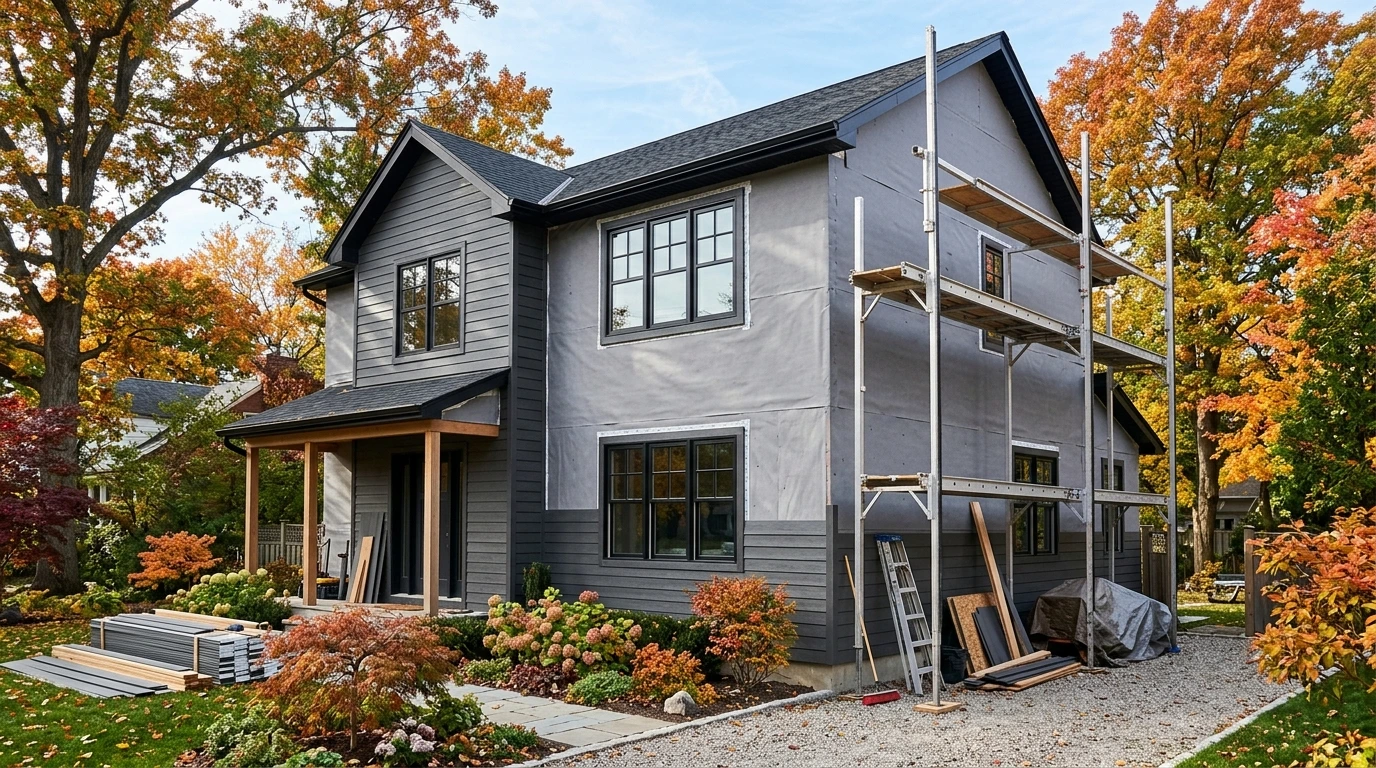
When a house needs a new roof, new windows and new siding, the question comes up quickly: windows or siding first, and where does the roof fit in? The order is not just a matter of scheduling. Windows, doors and siding all form part of the same wall that keeps water and wind out, and doing them in the wrong sequence can mean cutting new siding, patching flashing or redoing finishing work. Here is how to plan the order of exterior renovations on a Quebec home.
Why the Order of Exterior Work Matters
An exterior wall is a system of layers. From the outside in, you typically have the cladding, an air gap or furring, a weather-resistant membrane, the sheathing, the structure and the insulation. Windows and doors cut through all of those layers, so the joint between each opening and the wall is the most sensitive part of the envelope.
Water management depends on overlaps. Each layer should shed water over the one below it, like shingles on a roof. The flashing at the top of a window goes under the membrane above, and the sill flashing laps over the membrane below. When work is done in the right order, these overlaps happen naturally. When it is done backwards, installers have to cut, lift or patch finished layers to make them fit.
Sequencing also protects your investment. New windows can be scratched by roofers dropping debris, and new siding can be damaged when an installer has to remove pieces to reach a window frame.
Start at the Top: Why the Roof Usually Comes First
If the roof is leaking or near the end of its life, it generally comes first. Water entering at the top of the house can travel down inside the walls and damage the framing around windows, so it makes little sense to install new windows below a roof that is letting water in.
Roof work also produces debris and involves a lot of activity along the edges of the house. Doing it before the windows and siding keeps those new finishes out of harm's way. If your roof is in good shape, you can skip this step, but have the flashing at chimneys, walls and valleys checked, since those details often affect the walls below.
Gutters, soffits and fascia usually follow the roof. They control where water lands around the house and should be in place before the walls are finished.
Windows or Siding First: The General Rule
When both windows and siding are being replaced, the windows and doors normally go in first, or at least at the same stage, before the new siding is installed. The old siding is removed, the sheathing and membrane are inspected and repaired, the new windows are installed and flashed into the membrane, and only then does the new siding go on, finished neatly against the new frames.
Doing it this way lets the installer integrate each window properly with the weather barrier, using sill flashing, side flashing and a head flashing that all overlap correctly. The siding installer then works around finished openings, with trim and J-channels sized to the new frames instead of the old ones.
If you install new siding first and replace the windows a few years later, the new siding will usually have to be cut or partially removed around each opening. That is possible, but it adds work, risks damaging siding that may be hard to match, and makes it harder to integrate the new flashing with the membrane behind it.
- Step 1: roof repairs or replacement, then gutters, soffits and fascia.
- Step 2: remove old siding and repair sheathing and membrane where needed.
- Step 3: install windows and doors with proper flashing.
- Step 4: install new siding, trim and exterior finishing around the openings.
- Step 5: final caulking, painting and cleanup.
Adding Exterior Insulation Changes the Plan
Many homeowners take advantage of new siding to add rigid insulation on the outside of the walls. It can be a worthwhile upgrade for comfort, but it makes the wall thicker, which changes where the windows should sit. A window installed flush with the old wall can end up deeply recessed once the insulation and new siding are added.
If you plan exterior insulation, decide it before ordering windows. The installer can then position the frames correctly, plan extension jambs or bucks, and detail the flashing for the new wall thickness. Our page on windows installation explains the main installation steps in more detail.
What If Your House Has Brick or Stone?
On masonry houses, the question is less about siding and more about the condition of the brick around each opening. Steel lintels above windows can rust, mortar joints can crumble and sills can crack. If masonry repairs are needed around the openings, coordinate them with the window replacement so that each opening is sound before the new frame goes in.
Many Quebec homes combine materials, for example brick on the front and siding on the sides and back. In that case, plan the order facade by facade, and make sure the window finish, such as the aluminium capping colour, will work with both the existing brick and the new siding.
If You Cannot Do Everything at Once
Budgets and schedules do not always allow the whole exterior to be redone in one season. When you need to phase the work, deal with water first: a leaking roof or windows that let water into the wall come before cosmetic siding updates. Next, try to keep windows ahead of siding so you never have to undo new cladding.
If the siding has to be done first, for example because it is damaged, choose the windows at the same time even if you install them later. Knowing the style, the exterior colour and the frame depth lets the siding installer prepare the openings properly. Financing options can also help some homeowners group related work into a single, better coordinated project.
Doors follow the same logic as windows. A new entry door should be installed before the siding and trim around it are finished, so the threshold, flashing and casing can be integrated properly. Exterior changes to the look of the house may need a permit, so check with your municipality before starting.
- Fix anything that lets water in first.
- Keep windows and doors ahead of new siding whenever possible.
- Choose window styles, colours and depth before the siding goes on.
- Ask each contractor who is responsible for the flashing at every opening.
Plan Your Window Stage With a Free Estimate
Good coordination between trades is a big part of what makes exterior renovations last. Before work begins, make sure everyone knows the order, who handles the flashing at each opening and how the windows will meet the new siding or existing brick. It is worth bringing in a window professional early, ideally before the siding or insulation is ordered, so frame depth, colour and flashing details can be settled while there is still room to adjust.
Unisson Groupe manufactures and installs windows and doors in Saint-Laurent, Montreal, and serves the Greater Montreal area. If you are planning a roof, siding or insulation project, you can request a free in-home estimate to discuss where the windows fit in your schedule and how they will meet the rest of the wall.
Frequently Asked Questions
Should I replace windows or siding first?
In most cases, windows go in first, or at the same stage, before new siding is installed. That lets the installer flash each window into the weather barrier and lets the siding be finished cleanly around the new frames. Installing windows after new siding usually means cutting or removing siding around each opening.
Should the roof be done before the windows?
If the roof is leaking or near the end of its life, yes. Water entering at the top can damage the walls around the windows, and roof work creates debris that can scratch new windows. If the roof is sound, you can start with the walls.
Can new windows be installed without removing the siding?
Yes. Many window replacements are done from the existing opening without touching the siding, with new exterior capping and caulking. When the siding is also being replaced, however, coordinating both usually allows better integration with the weather barrier.
What happens if I add exterior insulation later?
The walls become thicker, and windows installed for the old wall depth can look deeply recessed and need extra trim and flashing work. If you plan exterior insulation, decide it before ordering windows so the frames can be positioned for the final wall.
Do I need a permit for new siding and windows?
It depends on your municipality and on how much the appearance of the house changes. Some cities and heritage sectors have rules on materials and colours. Check with your city or borough before ordering.